Group Flight Booking in Bangalore: How to Coordinate Tickets for Large Groups

Introduction
Imagine this: your entire group is ready for a trip, the dates are fixed, and everyone is excited. But there is one big challenge: getting everyone on the same flight without overspending or dealing with scattered bookings. When you need to arrange tickets for 20, 50 or even 100 passengers, finding available seats, comparing fares and coordinating passenger details can quickly become complicated. That is why choosing the right group flight booking in Bangalore matters.
Whether you are organising a corporate trip, destination wedding, educational tour or family holiday, booking flights for a large group requires careful coordination. From checking airline availability and understanding group fare conditions to managing passenger details, every step needs attention. With Step To Fly, you can explore group travel arrangements and get a clearer understanding of the booking process before finalising your journey.
What Is Group Flight Booking?
Group flight booking refers to arranging air travel for several passengers travelling together on the same route, usually with a shared travel purpose and similar journey dates. Instead of handling every passenger’s ticket separately, the organiser can explore group booking options and coordinate the requirements through a single process.
This approach is useful for corporate teams, wedding guests, school and college groups, sports teams, tour groups and extended families. Depending on the airline and route, group booking arrangements may have different conditions for passenger details, payment, ticket issuance, name changes and cancellations. These terms should always be checked before confirming the booking.
Why Group Flight Booking Is Useful for Bangalore Travellers
Bangalore is a major starting point for domestic and international business trips, family holidays, educational tours and organised group travel. When several people need to reach the same destination, coordinating their flights can save the organiser considerable time and reduce communication gaps.
Some important advantages include:
Centralised coordination: Passenger information, travel dates and flight preferences can be collected and managed in an organised manner.
Better schedule planning: The organiser can compare suitable departure and arrival times to help the group travel together.
Simplified communication: A single point of coordination can reduce confusion about flight timings, baggage rules and reporting instructions.
Easier budget management: Group organisers can compare available options against the overall travel budget before making a decision.
Support with travel arrangements: Flight planning can be considered alongside accommodation, transfers and other requirements.
For organisers handling several passengers, group flight booking services can be explored as part of a wider travel plan. However, group fares, seat availability and booking conditions depend on the airline, route, travel date and size of the group. A group booking should not automatically be assumed to cost less than individual tickets.
How to Coordinate Flight Tickets for a Large Group
A successful group journey begins with accurate information and a clear booking process. Even a small mistake in passenger names or travel dates can create complications later. Follow these steps to keep the process organised.
1. Confirm the Group Size and Travel Purpose
Start by identifying how many people will be travelling and why the journey is being planned. A corporate delegation may have different requirements from a family group or a student tour.
Prepare an initial passenger list and confirm whether everyone will travel on the same dates. Also identify passengers who may need special assistance, additional baggage or specific seating arrangements.
2. Finalise the Destination and Travel Dates
Confirm the departure city, destination, travel dates and preferred arrival time before comparing flights. If the group is travelling for a wedding, conference, examination or scheduled event, consider the time required for check-in, transfers and other activities.
Whenever possible, keep some flexibility in departure timings. A flexible schedule may provide more flight options and make it easier to coordinate the group.
3. Compare Flight Options
Compare available flights based on more than the ticket price. Check departure and arrival times, total journey duration, layovers, baggage allowance, airport changes and cancellation conditions.
For international journeys, also consider transit visa requirements where applicable. A flight with a lower fare may not be the most suitable choice if it involves long layovers or inconvenient arrival timings.
4. Collect and Verify Passenger Details
Passenger information should be collected carefully before tickets are issued. For domestic and international travel, ensure that the names and other required details match the relevant identification or travel documents.
For international bookings, verify passport details, validity requirements and visa-related considerations based on the destination. Avoid relying on informal messages or incomplete passenger lists when preparing the final booking information.
5. Understand Payment and Ticketing Conditions
Before making payment, confirm the fare, payment deadline, ticket issuance process and applicable booking conditions. Some group arrangements may allow a booking to be held temporarily, while others may require payment within a specified period.
Ask for clarity on name corrections, cancellations, refunds and changes in passenger numbers. Once the terms are understood, communicate the final details to everyone travelling.
A structured group travel planning process can help organisers manage these steps without overlooking important details.
Group Air Ticket Booking Near Me: What Should You Check?
When searching for group air ticket booking near me, do not choose a travel provider based only on convenience or advertised prices. The right support should help you understand the booking process and the conditions attached to the tickets.
Consider these points before proceeding:
What to check | Why it matters |
Group booking experience | Helps you understand whether the provider can coordinate multiple passenger requirements |
Flight options | Allows you to compare suitable schedules and routes |
Fare conditions | Clarifies payment deadlines, cancellation rules and change fees |
Passenger details | Reduces errors in names and travel document information |
Communication | Makes it easier to share updates with the organiser and group members |
Additional arrangements | Helps coordinate hotels, transfers and other travel requirements |
Ask for a clear breakdown of the proposed fare and any additional charges. If the group has special requirements, such as wheelchair assistance, extra baggage or children travelling with adults, communicate them before confirming the booking.
It is also useful to know who will handle changes or urgent queries if a flight schedule is revised. Clear communication before departure can prevent unnecessary confusion at the airport.
Corporate Group Flight Booking for Bangalore Companies
Bangalore has a large business ecosystem that includes IT companies, startups, manufacturing organisations, consulting firms and global capability centres. These businesses regularly arrange travel for employees, leadership teams, clients and delegates attending conferences, training programmes and corporate events.
Corporate group flight booking requires coordination between the travel organiser, employees and the company’s finance or administration team. The booking process should reflect the organisation’s travel policy, approved budget and business schedule.
Common requirements include:
Booking flights for employees attending conferences or business meetings.
Coordinating travel for teams visiting another office or project location.
Arranging tickets for company events, exhibitions and incentive trips.
Managing travel for visiting clients, speakers or business partners.
Aligning flight timings with hotel check-ins and local transportation.
Companies should prepare an approved passenger list and establish a clear process for collecting travel details. They should also decide whether employees must travel together or whether different flight timings are acceptable.
For larger corporate requirements, corporate travel arrangements can be discussed with a travel partner to understand the available planning and coordination support. The final arrangement should always be checked against the company’s internal approval and expense procedures.
Bulk Flight Tickets: Are They Always Cheaper?
One common assumption is that purchasing several tickets together will automatically result in a lower fare. In reality, the cost of bulk flight tickets depends on multiple factors, including airline policies, route demand, travel dates, available seats and the size of the group.
Airlines may provide specific group fare arrangements for eligible bookings, but the benefits and conditions differ. In some situations, individually booked tickets may appear cheaper, while a group arrangement may offer other advantages, such as coordinated travel and a more structured payment process.
Before deciding, compare the total cost rather than focusing only on the advertised base fare. Check baggage charges, seat selection fees, convenience fees, taxes and other applicable costs.
For a fair comparison, ask the provider to explain:
Whether the quoted amount is a group fare or a collection of individual fares.
How long the quoted fare or available seats can be held.
Whether the full passenger list is required before confirmation.
What happens if the group size changes.
Which cancellation, refund and modification conditions apply.
The best option is the one that meets the group’s schedule, budget and coordination needs. A slightly higher fare may still be worth considering if the overall booking conditions are more suitable.
Common Group Flight Booking Mistakes to Avoid
Group bookings involve several people, so even a small communication gap can affect the entire journey. Avoid these common mistakes when organising tickets.
Booking too late: Waiting until the last moment can limit flight choices and make coordination difficult, particularly during holidays and peak travel periods.
Submitting incorrect passenger names: Errors in names or travel document details may lead to correction charges or travel complications.
Ignoring baggage rules: Different passengers may have different baggage needs. Check the airline’s allowance before departure.
Not checking cancellation conditions: Understand the applicable rules before collecting money or confirming tickets.
Assuming everyone has the same requirements: Some passengers may need assistance, extra baggage or different seating arrangements.
Sharing unclear travel information: Send confirmed flight numbers, departure times, airport details and reporting instructions to all passengers.
Overlooking connecting flights: If the group has connecting journeys, allow sufficient time between flights and consider the risk of separate tickets.
A final passenger and itinerary review before ticket issuance can prevent many avoidable problems.
Group Travel Arrangements Beyond Flight Tickets
Flight booking is only one part of organising a group journey. Depending on the destination and purpose, the organiser may also need to arrange accommodation, airport transfers, local transportation, meals and sightseeing.
For corporate groups, the schedule may include conference venues, meeting locations and employee accommodation. For families and leisure groups, hotel preferences, room sharing, local activities and travel pace may be more important.
Educational groups may require additional planning around student supervision, travel documentation and transport between locations. International groups may also need guidance on visa requirements, travel insurance and destination-specific entry rules.
Considering these requirements together can make the overall journey easier to manage. Flight booking assistance can be discussed alongside other travel requirements when planning a coordinated group trip.
When Should You Book Flights for a Large Group?
There is no single booking deadline that works for every group. The ideal time depends on the destination, travel season, passenger count, airline availability and the purpose of the journey.
For peak holiday periods, major festivals, international travel and large corporate events, starting early is generally advisable. Early planning gives the organiser more time to compare schedules, collect passenger details and understand booking conditions.
A practical timeline can look like this:
Planning stage | What to do |
Initial planning | Confirm the destination, approximate group size and travel purpose |
Before comparing fares | Finalise travel dates and collect passenger requirements |
Before booking | Compare flight options, fares and applicable conditions |
After confirmation | Share ticket details and payment information with passengers |
Before departure | Recheck flight schedules, baggage rules and airport reporting instructions |
Do not assume that an early enquiry guarantees a particular fare or seat allocation. Availability and pricing can change, so confirm the booking terms directly before making payment.
Frequently Asked Questions
1. How many passengers are required for a group flight booking?
The minimum passenger count depends on the airline’s group booking policy. Some airlines offer dedicated group booking processes for a specified number of passengers. Confirm the applicable requirement for your route and travel date.
2. Is group flight booking cheaper than individual tickets?
Not always. Group fares depend on airline availability, route demand, travel dates and booking conditions. Compare the total cost and benefits before selecting an option.
3. Can all passengers travel on the same flight?
Yes, when sufficient seats are available and the booking arrangement allows it. However, availability may be limited during busy travel periods, so it is better to plan early.
4. Can passenger names be changed after a group booking is confirmed?
Name correction and passenger replacement rules vary by airline and fare type. Some changes may not be permitted, while others may involve additional charges. Check the conditions before confirming tickets.
5. Can a travel agency help coordinate flights for corporate or family groups?
A travel agency can help discuss flight options and coordinate travel requirements, depending on its services and the airline’s booking process. Confirm the scope of assistance, pricing and responsibilities before proceeding.
Conclusion
Organising flights for a large group becomes easier when passenger details, schedules, budgets and booking conditions are handled systematically. Whether you are arranging a corporate trip, family holiday, student tour or group event, early planning can help reduce last-minute confusion and make the journey more manageable.
If you are exploring group flight booking in Bangalore, compare the available options carefully and clarify the airline’s terms before confirming tickets. A well-planned booking process helps every traveller start the journey with better information and fewer uncertainties.
For assistance with coordinating your next group journey, connect with Step To Fly to discuss your travel dates, group size and overall requirements.
MICE Travel Agency in Bangalore: Planning Conferences, Meetings and Incentive Trips

Introduction
Bangalore is home to technology companies, global capability centres (GCCs), startups, manufacturing firms and professional service organisations. These businesses regularly organise leadership meetings, industry conferences, exhibitions and employee reward trips. Choosing the right MICE travel agency in Bangalore can help companies coordinate these events while keeping travel arrangements, budgets and participant requirements organised.
Planning corporate events in Bangalore requires an understanding of both business needs and local logistics. Participants may arrive from different cities, venues may be spread across business districts, and traffic can affect event schedules. A structured approach makes it easier to manage these details. Step To Fly can be approached for corporate group travel requirements, including meetings, conferences and incentive trips.
What Is MICE Travel?
MICE stands for Meetings, Incentives, Conferences and Exhibitions. It refers to travel organised around professional events and corporate activities. Unlike individual business trips, MICE programmes often involve groups of participants, planned schedules and multiple event-related arrangements.
Category | Purpose | Common examples |
Meetings | Bring people together for business discussions | Leadership reviews, client meetings and team gatherings |
Incentives | Recognise performance and reward employees | Sales achievement trips and employee reward holidays |
Conferences | Share knowledge and discuss industry developments | Seminars, annual conferences and training events |
Exhibitions | Showcase products, services and business capabilities | Trade shows, product launches and industry expos |
A Bangalore-based company might host a technology conference for international delegates, arrange a dealer meet for business partners or organise an incentive holiday for its sales team. Each event has different requirements, which is why planning should begin with a clear understanding of its purpose.
Why Bangalore Businesses Need Professional MICE Planning
Bangalore’s business landscape creates varied corporate event requirements. Technology companies and GCCs may organise regional conferences and leadership meetings. Startups may bring investors, clients and distributed teams together. Manufacturing and engineering businesses may conduct dealer meets, product demonstrations and industry exhibitions.
These events can involve employees and guests travelling from several locations. When bookings, schedules and event arrangements are handled independently, internal HR and administration teams may spend considerable time coordinating details.
Professional MICE planning helps businesses manage the event as one organised project. It can provide better visibility into costs, reduce administrative follow-ups and create a more convenient experience for participants.
The local business location also matters. For example:
Bangalore business area | Planning consideration |
Whitefield | Consider venue and accommodation options near technology parks and corporate offices. |
Outer Ring Road | Account for traffic and transfer times around major IT corridors. |
Electronic City | Consider accessibility for technology, engineering and manufacturing teams. |
Manyata Tech Park and North Bangalore | Evaluate accommodation and transport for companies operating in northern business districts. |
Central Business District | Consider access to business hotels, meeting venues and client locations. |
Peenya Industrial Area | Relevant for industrial meetings, supplier events and manufacturing-related gatherings. |
These areas have different travel requirements. A venue that is convenient for one group may be difficult for participants staying elsewhere. Businesses should consider the event location and attendee movement before confirming arrangements.
Planning a Corporate Conference in Bangalore
A successful conference needs a practical plan that connects the event’s objectives with the experience of its attendees. The following steps help organisers build that plan.
1. Establish the Event Brief
Begin with the purpose, dates, duration and expected number of participants. Identify whether the event is an internal meeting, customer conference, training programme or industry gathering.
Also prepare a participant list with details such as departure city, arrival preferences, accommodation needs and any special requirements. This information helps estimate the overall scope and budget.
2. Choose the Right Venue
The venue should match the event’s size and format. Consider seating capacity, presentation equipment, meeting rooms, dining facilities and accessibility.
For Bangalore events, evaluate the venue in relation to the participants’ hotels and likely travel routes. Allow realistic time for transfers, especially when attendees need to arrive before a scheduled session.
3. Coordinate the Event Schedule
Prepare a schedule that considers participant arrival times, registration, conference sessions, meals and departures. Avoid placing important sessions too close to expected arrival times, particularly when attendees are travelling from outside Bangalore.
A clear schedule also helps the organisers identify where additional arrangements, such as early check-ins or pre-event meetings, may be required.
4. Prepare Participant Communication
Share essential information before the event. This may include the venue address, agenda, travel details, accommodation information, dress requirements and contact details for assistance.
A single, updated itinerary is easier for participants to follow than multiple messages containing different versions of the schedule.
What Does MICE Travel Management Include?
MICE travel management brings the travel-related parts of a corporate event under a coordinated plan. The services required depend on the group size, destination and event format.
Group Flights and Travel Coordination
Companies hosting national or international events may need to arrange travel for participants from several cities. Booking requirements can differ according to arrival dates, preferred flight times, baggage needs and individual schedules.
Organisers should confirm passenger details early and establish a process for handling changes. This is particularly important when speakers, senior executives or international guests have fixed schedules.
Accommodation and Hotel Selection
Hotel selection should consider more than room rates. Distance from the venue, room availability, meeting facilities, dining options and cancellation conditions can all influence the decision.
For group stays, advance corporate hotel booking can help businesses review suitable options and confirm room requirements before availability becomes limited.
Ground Transportation
The transport plan should reflect the number of attendees and the event schedule. Depending on the group, this may involve airport pickups, shared vehicles or dedicated transport for speakers and senior guests.
In Bangalore, organisers should consider the time of day and distance between the airport, hotels and venue. Building reasonable travel buffers into the schedule can help avoid unnecessary pressure on participants.
On-Trip Coordination
Even carefully prepared plans may need adjustments. Flight changes, delayed arrivals or updates to the event agenda can affect existing arrangements.
Before choosing a travel partner, businesses should understand how booking updates, urgent requests and participant communication will be managed. Clear responsibilities help prevent confusion when plans change.
Incentive Travel Packages Bangalore: Rewarding Employees Through Experiences
Incentive travel gives companies a way to recognise performance and build stronger relationships within their teams. It can be used for sales achievement programmes, employee recognition, channel partner rewards and annual performance celebrations.
The destination should reflect the company’s objective, group size, available time and budget. A short domestic holiday may work well for a team with limited leave, while an international trip may suit a larger reward programme planned well in advance.
Incentive travel packages in Bangalore can be considered around different group interests and travel styles, such as:
Short domestic escapes: Suitable for teams looking for a brief break without extensive travel.
Beach holidays: Combine relaxation with informal group activities.
Adventure experiences: Offer opportunities for trekking, outdoor activities and shared challenges.
International group trips: Provide a larger travel experience when the budget and preparation time allow.
Wellness retreats: Give employees an opportunity to unwind through nature and wellness-focused activities.
The programme should feel like a genuine reward rather than another compulsory work event. Gathering employee preferences and considering accessibility, travel duration and activity levels can make the experience more meaningful.
Common MICE Planning Challenges and How to Avoid Them
Corporate events can become difficult to manage when decisions are delayed or responsibilities are unclear. Some common challenges can be addressed during the planning stage.
Challenge | Practical solution |
Budget increases | Set a realistic budget and review inclusions, taxes and cancellation conditions before confirming suppliers. |
Venue and hotel locations are inconvenient | Evaluate travel time between accommodation and the event venue. |
Participant numbers change | Keep attendee information updated and confirm deadlines for booking modifications. |
Conflicting schedules | Coordinate the event agenda with arrival and departure plans. |
Last-minute communication gaps | Assign a point of contact and share one updated itinerary. |
Unclear supplier responsibilities | Confirm who handles each booking, payment and change request. |
One common mistake is treating travel arrangements as a separate task after the venue and agenda have been finalised. Travel considerations should be included from the beginning because they can influence venue selection, event timings and the overall budget.
How to Choose the Right MICE Travel Agency in Bangalore
Not every travel agency offers the same level of corporate planning support. Businesses should evaluate potential partners based on their requirements rather than choosing only by price.
Corporate group experience: Ask whether the agency has handled conferences, meetings, exhibitions or incentive trips involving a similar number of participants.
Service coverage: Check which arrangements it can assist with, including group bookings, accommodation, transportation and itinerary coordination.
Budget transparency: Request a clear cost breakdown and understand what is included, what may cost extra and which cancellation conditions apply.
Communication and support: Find out how booking updates, urgent requests and schedule changes are handled.
Flexibility: Corporate events can change as attendee numbers and requirements become clearer. Understand the process for modifying existing arrangements.
Destination knowledge: For events outside Bangalore, local knowledge can help with accommodation choices, transportation and destination planning.
Before requesting a proposal, prepare an event brief with the dates, location, group size, departure cities, accommodation requirements and estimated budget. This gives the agency enough information to suggest arrangements that match the actual event.
Example: Planning a Conference for a Bangalore Technology Company
Consider a technology company organising a two-day conference near its Whitefield office for 80 employees and business partners. Participants are travelling from Mumbai, Hyderabad and Chennai, while local employees will attend from different parts of Bangalore.
The company needs to coordinate outstation travel, nearby accommodation, airport transfers and the conference schedule. It also needs to account for registration timings, speaker arrivals and daily movement between the hotel and venue.
A coordinated plan allows the administration team to maintain participant information, monitor important booking details and share one itinerary. Instead of following up separately on every arrangement, the team can work from a common schedule and respond more efficiently when details change.
This illustrative scenario shows why MICE planning is valuable for Bangalore businesses. The objective is not simply to arrange travel, but to make sure the event’s logistics support its business purpose.
When Should Businesses Start Planning MICE Travel?
The preparation time depends on the event size, destination, season and number of participants. The following timeline can serve as a starting point for larger corporate events.
Planning stage | Suggested timeline |
Define objectives, group size and budget | 3–6 months before |
Shortlist venues and destinations | 3–5 months before |
Review travel and accommodation options | 2–4 months before |
Confirm participant details | 1–3 months before |
Finalise schedules and local arrangements | 2–4 weeks before |
Share final event information | Before departure |
International conferences and incentive trips may require additional preparation for passports, visas and other documentation. Businesses should also allow time for participant changes and supplier confirmation.
Frequently Asked Questions
1. What does a MICE travel agency do?
A MICE travel agency helps businesses organise travel requirements for meetings, incentive trips, conferences and exhibitions. Services may include group bookings, accommodation, transportation and itinerary coordination.
2. Why do Bangalore companies need MICE travel services?
Bangalore companies often organise conferences, client meetings, training programmes and incentive trips involving participants from different cities. Professional planning can help coordinate these arrangements around the event schedule.
3. Can small businesses use MICE travel services?
Yes. MICE services are not limited to large companies. Small and medium-sized businesses can use planning support for team meetings, client events, training programmes and employee reward trips.
4. What should companies consider when planning incentive travel?
Companies should consider the purpose of the reward, employee preferences, group size, destination, travel duration and budget. The programme should be practical and enjoyable for participants.
5. How early should a company book conference travel?
For larger events, beginning three to six months in advance is a useful approach. The exact timeline depends on the destination, group size, hotel availability and travel season.
Conclusion
For Bangalore businesses, MICE planning is an important part of organising successful corporate events. Whether a company is hosting a leadership meeting in Whitefield, an industry conference near the Outer Ring Road or an employee reward trip, the event needs a clear plan for participants, schedules and budgets.
A well-coordinated corporate event travel plan can reduce administrative pressure and help companies focus on their business objectives. Starting early also gives organisers more time to evaluate venues, suppliers and participant requirements.
Businesses looking for a MICE travel agency in Bangalore can approach Step To Fly to discuss their corporate group travel needs. Sharing the event location, dates, participant numbers and budget is a practical first step towards planning a well-organised corporate experience.
Corporate Travel Management for SMEs in Bangalore: Flights, Hotels, and Employee Travel

Introduction
Business travel is an important part of running a growing company. Whether employees visit clients, attend conferences, or travel for project meetings, every trip involves flights, hotels, transport, and expense approvals. Managing these arrangements separately can become difficult for small and medium-sized businesses.
A structured approach to corporate travel management in Bangalore helps SMEs organise employee journeys, control expenses, and reduce administrative work. With the right booking process, businesses can manage travel requirements without maintaining a dedicated travel department.
For companies looking to organise their travel requirements, Step To Fly can be a starting point for exploring travel planning options. The focus should be on making business journeys convenient for employees while keeping bookings and expenses under control.
Why Corporate Travel Management Matters for SMEs
Large companies may have dedicated travel teams, but SMEs often depend on HR executives, office administrators, or business owners to arrange employee travel. This can work when trips are occasional, but frequent bookings create additional responsibilities.
Consider a Bangalore-based IT company with employees travelling to Mumbai, Hyderabad, and Chennai for client meetings. Different booking methods, delayed approvals, and missing invoices can make travel coordination unnecessarily complicated.
A structured travel process helps businesses:
-
Control flight and hotel expenses.
-
Simplify booking approvals.
-
Reduce administrative follow-ups.
-
Maintain organised travel records.
-
Handle cancellations and schedule changes.
-
Improve employee travel convenience.
The objective is simple: employees should be able to focus on their business responsibilities instead of spending time managing travel arrangements.
1. Corporate Flight Booking: Manage Costs and Timings
Flight bookings are often a significant part of business travel expenses. However, choosing the cheapest ticket does not always mean getting the best value.
Departure timings, baggage allowances, cancellation conditions, and meeting schedules should all influence the booking decision. For example, an employee travelling from Bangalore to Delhi for a morning meeting may need to arrive the previous evening.
SMEs can establish simple flight-booking guidelines:
|
Consideration |
What to check |
|
Travel dates |
Fixed or flexible dates |
|
Departure time |
Suitable for the business schedule |
|
Ticket price |
Total fare and additional charges |
|
Baggage |
Applicable baggage allowance |
|
Cancellation |
Refund and rescheduling conditions |
|
Approval |
Authorised person for booking confirmation |
Companies should encourage planning whenever travel dates are known. For urgent business trips, they should also define who can approve last-minute bookings.
2. Corporate Hotel Booking: Choose Comfort and Convenience
Hotel selection affects both employee comfort and overall travel expenses. A cheaper hotel located far from the meeting venue may increase local transport costs and waste valuable time.
For example, an employee visiting Whitefield for a two-day project meeting may benefit from staying closer to the client’s office. A slightly higher room rate could be more economical when daily travel expenses are considered.
Before confirming a hotel, businesses should check:
-
Distance from the meeting venue.
-
Room category and occupancy.
-
Breakfast and meal inclusions.
-
Wi-Fi and basic work facilities.
-
Check-in and check-out timings.
-
Cancellation and refund policies.
-
Company billing and invoice details.
SMEs should establish reasonable accommodation limits based on the destination and purpose of travel. This gives employees clear expectations while helping finance teams monitor expenses.
3. Employee Travel Management: Create a Simple Booking Process
Employee travel management covers the complete journey, from the initial travel request to final expense submission. Without a defined process, employees may book independently, managers may miss approval requests, and finance teams may struggle to verify expenses.
A simple workflow can make responsibilities clear.
|
Stage |
Activity |
Responsibility |
|
Travel request |
Share destination, dates, and purpose |
Employee |
|
Approval |
Review travel requirements and budget |
Manager |
|
Booking |
Arrange flights, hotels, and transfers |
Admin team |
|
Travel support |
Share updates and handle changes |
Employee and coordinator |
|
Expense closure |
Submit invoices and claims |
Employee and finance |
Every employee should receive a confirmed itinerary before departure. It should include flight details, hotel information, transfer arrangements, and an appropriate contact for assistance.
This process reduces confusion and makes travel coordination easier as the company grows.
4. Develop a Corporate Travel Policy
A corporate travel policy establishes clear rules for employee bookings and expenses. SMEs do not need complicated documentation. A short policy covering common travel requirements is usually a practical starting point.
It should explain who can approve trips, which expenses are covered, and how employees should submit bills.
|
Policy area |
Recommended guideline |
|
Travel approval |
Identify authorised managers |
|
Flight bookings |
Define booking and fare preferences |
|
Hotel allowance |
Set accommodation limits |
|
Local transport |
Explain approved transport options |
|
Meals |
Define eligible meal expenses |
|
Cancellations |
Establish approval rules for changes |
|
Documentation |
Specify required invoices and receipts |
|
Reimbursement |
Set claim submission deadlines |
The policy should also include a faster approval process for urgent client visits. This allows employees to respond to business requirements without unnecessary delays.
Review the guidelines as travel frequency increases or the company expands into new markets.
5. Control Business Travel Expenses Without Reducing Comfort
Cost control does not mean selecting the cheapest flight or hotel every time. A low-cost option may create additional expenses through inconvenient timings, long transfers, or restrictive cancellation conditions.
Businesses should evaluate the overall value of each booking rather than looking at the initial price alone.
Here are some practical ways to manage travel spending:
Plan trips early: Confirm travel dates as soon as possible and compare available booking options.
Set approval limits: Allow managers to approve routine expenses within defined budgets.
Review recurring routes: Track frequently used routes such as Bangalore to Mumbai, Delhi, Chennai, and Hyderabad.
Compare total costs: Include baggage, transfers, meals, and additional booking charges.
Track cancellations: Record changes and identify whether better planning could prevent repeated costs.
Review monthly expenses: Compare estimated and actual travel spending to identify unusual increases.
Even a basic spreadsheet can help SMEs monitor bookings by employee, department, destination, and expense category.
6. How Digital Tools Are Improving Corporate Travel Management
Digital tools are changing how businesses arrange and monitor employee travel. Companies can now use online systems to manage booking requests, approvals, itineraries, and expense records.
The 2026 Thomas Cook India and SOTC Business Travel Report found that more than 70% of surveyed corporates were increasing their use of digital tools for bookings, approvals, and expense management. This reflects the growing importance of organised travel information and faster administrative processes.
SMEs do not necessarily need expensive software to get started. They can begin with shared travel request forms, digital invoice storage, and a central booking record.
Useful digital functions include:
-
Online employee travel requests.
-
Manager approval tracking.
-
Centralised booking information.
-
Digital invoice and receipt storage.
-
Notifications for itinerary changes.
-
Travel expense reports.
As travel requirements increase, businesses can consider integrated booking and expense management platforms.
7. Should SMEs Manage Bookings Internally or Use a Travel Agency?
The right arrangement depends on how frequently employees travel and how much administrative support the business requires.
A company with occasional domestic trips may manage straightforward bookings internally. Businesses handling international travel, group bookings, or frequent itinerary changes may benefit from external assistance.
|
Requirement |
Internal booking |
Travel agency |
|
Occasional domestic trips |
Easy to manage for some SMEs |
Additional coordination available |
|
Multiple employee bookings |
Requires internal tracking |
Can help coordinate bookings |
|
International travel |
Requires internal planning |
May assist with travel arrangements |
|
Last-minute changes |
Handled by internal team |
Support depends on the service |
|
Expense records |
Maintained internally |
Ask about available documentation |
|
Group travel |
Requires administrative effort |
Can help organise multiple travellers |
Some SMEs may prefer a combination of both. Routine bookings can be handled internally, while complex itineraries and group travel receive additional support.
When comparing business travel booking Bangalore options, businesses should consider service charges, booking procedures, cancellation support, invoice formats, and communication arrangements.
8. How to Choose a Corporate Travel Agency Near You
Searching for a corporate travel agency near me is a common starting point for businesses looking for travel assistance. However, proximity alone should not determine the final choice.
A suitable provider should understand business travel requirements and offer clear information about its services and charges.
Before selecting a provider, evaluate these factors:
-
Corporate travel experience: Check whether the provider handles employee bookings, group travel, and multiple destinations.
-
Flight and hotel options: Understand how available options are compared against your company’s budget.
-
Transparent pricing: Request a breakdown of fares, hotel costs, service fees, and additional charges.
-
Invoice support: Confirm how company billing details and booking documentation are handled.
-
Communication: Identify whom employees can contact for booking changes.
-
Service coverage: Check whether the provider can support your regular domestic and international destinations.
Bangalore businesses may have different requirements depending on their location and industry. An IT company in Whitefield may arrange frequent client visits, while a manufacturing business near Peenya may need supplier visits and employee travel to industrial locations.
Choose a provider based on the actual support your organisation needs, not just an advertised discount.
9. Business Travel Booking in Bangalore: A Practical Example
Consider a Bangalore-based technology company whose employees regularly travel to Mumbai for client meetings and Hyderabad for project reviews.
Initially, the office administrator handles flight bookings, employees arrange their own hotels, and finance collects bills after every trip. As travel increases, the administrator spends more time following up, while finance struggles to match invoices with approved expenses.
The company introduces a central travel request process. Employees submit their destination, dates, business purpose, and estimated expenses before booking. Managers approve requests, the admin team coordinates reservations, and finance receives the relevant booking records. The company also introduces basic flight and hotel guidelines.
This approach does not require a large travel department. It simply makes responsibilities clearer and reduces avoidable administrative work. For SMEs, organised business travel booking in Bangalore starts with maintaining accurate information and following a consistent process.
Frequently Asked Questions
1. What is corporate travel management Bangalore?
Corporate travel management Bangalore refers to organising business trips for companies based in Bangalore. It includes flight reservations, hotel bookings, local transport, employee travel requests, approvals, and expense tracking.
2. How can SMEs manage employee travel efficiently?
SMEs can introduce a central travel request process, define approval limits, establish flight and hotel guidelines, and maintain digital booking records. These steps help reduce administrative confusion.
3. What services should a corporate travel agency provide?
Depending on the agreed arrangement, services may include domestic and international flight bookings, hotel reservations, group travel coordination, transfers, itinerary planning, and booking-change assistance.
4. How can businesses reduce corporate hotel booking expenses?
Businesses can compare hotel locations, room rates, meal inclusions, and cancellation policies. Setting accommodation limits and reviewing frequently used destinations can also help manage costs.
5. Is a corporate travel agency suitable for small businesses?
Yes. It can be useful when employees travel frequently, or bookings involve multiple destinations and last-minute changes. SMEs with occasional travel may find internal booking sufficient.
Conclusion
As Bangalore businesses expand their client networks and operations, employee travel becomes an important part of business planning. Flights, hotels, transport, approvals, and expense records need to work together.
A practical corporate travel management Bangalore strategy does not require a large budget or complicated software. SMEs can start with clear travel policies, defined responsibilities, and organised booking records.
If your organisation is reviewing its travel arrangements, explore the planning options available through Step To Fly. A structured approach to employee travel and corporate hotel booking can help your team spend less time coordinating journeys and more time focusing on business priorities.
How to Plan a Family Holiday from Bangalore Without Overspending or Travel Stress

Introduction
A family holiday should be an opportunity to relax and spend quality time together, but planning one can quickly become stressful. Transport bookings, hotel prices, meals, and sightseeing expenses all affect the final budget. When family members have different preferences and schedules, choosing the right holiday becomes even more challenging.
The right Family Tour Packages from Bangalore can help simplify these decisions by bringing important travel arrangements together. However, a good holiday is not necessarily the cheapest package or the one that includes the most attractions. It is the one that balances comfort, cost, and convenience while giving everyone enough time to enjoy the experience.
Step To Fly can be a starting point for exploring holiday options. Before booking, families should understand their budget, preferred travel style, and practical requirements. A little preparation can help avoid unnecessary expenses and make the entire journey more enjoyable.
1. Decide Your Budget Before Choosing a Destination
Many families select a destination first and calculate the expenses later. This can lead to overspending when accommodation, local transport, and activities cost more than expected. Setting a budget beforehand helps narrow down destinations and makes comparisons easier.
Start by estimating the cost of transportation, accommodation, meals, sightseeing and local travel. Keep a separate amount for unexpected expenses rather than spending the entire budget on bookings. This is particularly useful for families travelling with young children or older adults, whose needs may change during the trip.
For example, choosing a reasonably priced hotel near the main attractions may save more money than booking a cheaper property far away. The aim is to distribute your budget wisely instead of spending too much on one part of the holiday.
2. Choose Travel Dates That Offer Better Value
Travel dates can significantly affect the overall cost of a family holiday. School vacations, public holidays, and long weekends often attract higher demand for flights, hotels, and sightseeing services. If your schedule allows some flexibility, comparing nearby dates may help you find better options.
Look beyond the advertised package price when comparing travel dates. A cheaper flight arriving late at night could require additional accommodation or a costly transfer. Similarly, a hotel located far from the attractions may increase daily transport expenses and reduce the time available for sightseeing.
When comparing family holiday packages in Bangalore, check the complete itinerary, accommodation location, meal arrangements, and included transfers. Consider these details alongside the price to understand which option offers the best overall value.
3. Select a Destination That Fits Your Holiday Duration
The destination should match the time you have available. A place that requires lengthy travel may work well for a week-long holiday but leave little time for enjoyment during a short break. Families should calculate the actual time available at the destination rather than counting only the number of days away from home.
For a short holiday, consider places that are convenient to reach and do not require frequent transfers. Longer trips allow more flexibility for sightseeing, relaxation, and activities that need advance planning. Choosing a suitable destination also reduces the pressure to visit too many attractions in a limited period.
Consider everyone’s comfort before finalising the itinerary. Children may need regular breaks, while older family members might prefer fewer hotel changes and shorter walks. A manageable schedule can make the holiday more enjoyable than an ambitious plan filled with back-to-back activities.
4. Compare Package Inclusions Before Booking
Two holiday packages may look similar but offer different levels of convenience. One might include accommodation, breakfast, airport transfers and sightseeing transport, while another may cover only the hotel and selected activities. Without checking these differences, the cheaper option could eventually cost more.
Before making a booking, confirm the room category, occupancy limits, taxes, meal plans, transfer arrangements and sightseeing charges. Check whether optional activities require additional payment and whether the package includes transportation between attractions. Cancellation policies and date-change fees also deserve attention.
Package detail | What to check |
Transportation | Flights, train tickets, transfers and local travel |
Accommodation | Room type, occupancy, taxes and extra beds |
Meals | Included meals and additional dining costs |
Sightseeing | Entry fees, guides and optional activities |
Transfers | Airport pickup and travel between locations |
Booking terms | Cancellation charges and refund conditions |
Compare the total expected cost instead of focusing only on the starting price. A package that includes services your family would otherwise arrange separately may offer better value, while unnecessary add-ons can increase expenses without improving the experience.
5. Build an Itinerary That Leaves Time to Relax
Trying to visit several attractions every day can make a family holiday exhausting. Early starts, long drives, and rushed meals may leave children tired and adults struggling to keep the schedule on track. Instead of filling every hour, plan a few meaningful activities and leave room for rest.
Give each day a manageable focus, such as sightseeing, an outdoor activity, or exploring the local area. Check travel times between attractions and consider how much walking each activity involves. This helps prevent unrealistic schedules that look good on paper but are difficult to follow.
It is also useful to identify which activities are essential and which can be skipped. If the weather changes or someone needs extra rest, the family can adjust the plan without losing the entire day. Flexibility often makes a holiday feel more relaxed and less expensive.
6. When Should You Consider Customized Family Tours?
Standard packages can be convenient when their schedules and activities suit everyone. However, families may have different requirements depending on the ages of the travellers, preferred experiences, and level of comfort needed. A family with a toddler may need frequent breaks, while grandparents may prefer accessible accommodation and shorter transfers.
In these situations, customized family tours can help families adjust their itinerary to match their priorities. Customization does not necessarily mean choosing luxury hotels or adding more attractions. It could simply involve staying longer in one location, reducing travel between destinations, or selecting activities that suit everyone.
Before confirming a customized itinerary, ask for a clear cost breakdown. Check accommodation, transportation, meals, activities, and any additional charges. Compare the final price with a standard package to determine whether the flexibility is worth the extra cost.
7. Save Money Without Sacrificing Comfort
Reducing travel expenses does not mean choosing the cheapest option at every stage. A low-cost hotel far from the main attractions may increase transport expenses, while an inconvenient flight schedule could create additional costs. The better approach is to identify where you can save without affecting the overall experience.
Start by comparing accommodation based on its location, facilities, and total cost. A property closer to the attractions may save time and money on daily transfers. Families should also compare room arrangements carefully, as a suitable family room or adjoining rooms may be more practical than booking separate rooms without checking alternatives.
Another effective way to manage expenses is to prioritise activities. Choose experiences that genuinely interest the family instead of paying for every available excursion. Compare transport options, check whether advance bookings provide genuine savings, and keep some money aside for unexpected expenses.
8. Learn from a Practical Family Travel Scenario
Imagine a family from Bangalore planning a four-day holiday during a school break. The parents find a discounted package with an attractive hotel and several sightseeing activities. However, after reviewing the details, they discover that local transfers are excluded and the hotel is far from the main attractions.
Instead of booking immediately, they compare another option that includes convenient transfers and a more manageable schedule. They also remove one optional excursion and keep an afternoon free for relaxation. Although the revised plan includes fewer activities, it reduces unnecessary travel and makes the overall budget easier to manage.
This example shows why the complete travel experience matters more than the advertised price. A well-planned holiday should balance cost, comfort, and convenience rather than forcing the family to rush between attractions or pay for services they do not need.
9. Avoid Common Mistakes That Increase Travel Stress
Many travel problems begin with small details that are overlooked during booking. Confirm everyone’s availability before purchasing tickets, check the hotel’s location, and review cancellation conditions. Families should also allow sufficient time between transport connections and avoid scheduling demanding activities immediately after a long journey.
Sharing the itinerary with everyone travelling can prevent confusion about departure times, meeting points and bookings. Parents should prepare essential documents, medicines and other items required by their children. For outdoor activities, checking the weather and identifying alternatives can also help avoid last-minute changes.
Finally, do not treat every activity as compulsory. Travel delays, weather changes, and different energy levels are normal during family holidays. A flexible plan makes it easier to adapt without creating unnecessary tension or spending.
Frequently Asked Questions
1. How can I find affordable Family Tour Packages from Bangalore?
Set a realistic budget and compare the complete cost of different packages, including transportation, accommodation, meals, sightseeing, and local transfers. Check the itinerary and cancellation conditions before booking, as the cheapest advertised option may not provide the best overall value.
2. What should I check before booking family holiday packages in Bangalore?
Review the accommodation, travel schedule, meal inclusions, transfer arrangements, sightseeing charges, and additional fees. Make sure the itinerary suits everyone travelling and confirm the important package details before making payment.
3. How do I choose suitable family tour packages in India?
Consider your available time, budget, preferred activities, and seasonal conditions. For a short break, prioritise convenient transport and a manageable itinerary. For a longer holiday, compare destinations that offer the experiences your family wants without excessive travel between locations.
4. Are customized family tours better than standard packages?
Customized tours may be more suitable when your family needs specific room arrangements, private transport, or a flexible sightseeing schedule. Standard packages can be more convenient when their existing arrangements meet your requirements. Compare the total cost and inclusions before deciding.
5. How early should I plan a family vacation from Bangalore?
Planning several weeks or months can provide more options for school holidays, festivals, and peak travel periods. Trips involving flights, ferries or multiple destinations may require additional preparation. Always check availability and cancellation conditions before confirming your bookings.
Make Your Next Family Holiday Easier to Plan
A memorable family holiday does not depend on visiting the greatest number of attractions or choosing the most expensive hotel. What matters is finding an arrangement that fits your budget, keeps travel manageable, and gives everyone enough time to enjoy the experience. Careful preparation can also reduce last-minute decisions and unexpected expenses.
Before making a final booking, compare family travel packages according to your family’s actual priorities. Review the itinerary, transport arrangements, accommodation, and booking conditions rather than relying only on promotional prices.
With the right preparation, your next family holiday can be comfortable, cost-conscious and easier to enjoy. Step To Fly can help you explore suitable travel options and plan a holiday that matches your family’s preferences and budget.
International Tour Packages from Bangalore: How to Plan a Hassle-Free Overseas Holiday

Introduction
Your first international holiday can feel exciting until the planning begins. Which country fits your budget? How much time should you spend there? Do you need a visa, travel insurance, or bookings for attractions? Even choosing between two similar flight options can affect your entire itinerary. The right International Tour Packages from Bangalore should help you answer these questions before you commit your money, so you can focus on the experiences you want from your trip.
For travellers who prefer help coordinating flights, accommodation and destination planning, Step To Fly offers domestic and international holiday planning services. Comparing the available services and package details can help you understand which arrangements you can handle yourself and where professional assistance may be useful.
An overseas holiday does not need to be complicated, but it does require decisions in the right order. Your passport, entry requirements, travel dates, hotel location, and total budget all influence what is practical. This guide explains how travellers from Bangalore can organize these details, compare destinations, and avoid common mistakes while planning an international trip.
1. Choose a Destination That Fits Your Budget and Travel Style
The first step is not booking a flight. It is deciding what kind of holiday you want. Some travellers prefer beaches and relaxed resort stays, while others want cultural experiences, shopping, outdoor activities or a combination of different cities. Your available leave, travelling companions and total budget should help narrow the choices.
For a relatively short overseas break, Thailand, Malaysia and Singapore may be worth comparing. Thailand offers beaches, markets and varied food experiences; Malaysia combines city attractions with nature and island destinations; Singapore suits travellers interested in urban attractions, family activities and convenient public transport. Bali is another option for couples and leisure travellers who want a mix of beaches, temples, cafés and scenic stays.
Travellers with more time may consider Japan, South Korea, Europe or Australia, depending on their interests and budget. These trips can involve higher airfare, longer travel times or more complex itineraries. Rather than choosing a destination solely because it is trending online, compare the number of days required, seasonal conditions, entry rules and the experiences you can realistically fit into the trip.
2. Compare International Packages by Total Cost
A package’s starting price rarely tells the whole story. One quotation may include return flights, accommodation, airport transfers and selected sightseeing, while another may cover only hotels and a few activities. Comparing the headline prices without checking the inclusions can lead to an inaccurate budget.
When evaluating international tour packages, Bangalore travellers find online or through travel agencies; request a clear breakdown of the major expenses.
Expense | What to confirm |
Return flights | Departure times, baggage allowance, layovers and airport details |
Accommodation | Hotel name, location, room category and number of nights |
Transfers | Airport pickup, drop-off and transport between destinations |
Sightseeing | Included activities, entrance tickets and optional excursions |
Meals | Breakfast, other meals and any dining restrictions |
Visa and entry costs | Applicable fees and assistance charges |
Travel insurance | Coverage, exclusions and whether it is included |
Taxes and additional charges | Any costs payable separately |
Cancellation terms | Refund conditions and change fees |
Build a separate allowance for meals not included in the package, local transport, shopping and unexpected expenses. For international travel, currency conversion and card charges may also affect spending. A realistic budget should cover the entire holiday, not just the amount paid to the travel provider.
3. Understand Visa Requirements Before Booking
Visa planning deserves attention early in the process because entry rules differ by destination, nationality, and passport type. Some countries may permit visa-free entry or offer an electronic travel authorization, while others require an application and supporting documents before departure. Rules can change, so check the relevant embassy, consulate or official immigration website for your destination.
Commonly requested documents may include a valid passport, application form, photographs, accommodation details, return travel information, financial evidence, and a travel itinerary. The exact list depends on the destination and the applicant’s circumstances. Do not assume that a confirmed flight or hotel reservation guarantees visa approval.
If you want help organizing the process, visa assistance Bangalore services may be useful for understanding document requirements, application steps, and appointment procedures. Confirm exactly what the provider will handle, which documents you must supply, and whether visa fees are separate. Allow enough time for processing, and avoid making non-refundable bookings based on an assumed approval date.
4. Plan Flights and Accommodation Together
Flight selection affects how much of your holiday you can actually enjoy. A low fare may involve a long layover, an inconvenient arrival time, or additional baggage charges. Compare the complete journey, including airport transfers and the time needed to reach your hotel after landing.
Accommodation should be chosen with the itinerary in mind. A centrally located hotel may reduce transport time, while a resort outside the city may suit travellers who want to relax rather than sightsee throughout the day. Check recent reviews, room details, cancellation conditions, and the distance to the places you intend to visit.
For a multi-city trip, consider how much time will be lost changing hotels and travelling between destinations. Spending four nights in one location and three in another may be more comfortable than moving every day. A well-paced itinerary can leave room for local discoveries without making the trip feel like a series of transfers.
5. When Are Customized International Tours Worth Considering?
Fixed packages can be convenient when the destination, hotel category, and schedule already match your requirements. They may reduce planning time and make the main arrangements easier to compare. However, a standard itinerary may not suit every family, couple or group.
Customized international tours allow travellers to discuss the duration, accommodation, activities and pace of the holiday. A family travelling with children may need fewer activities each day, while a couple may want extra time at a beach resort. Friends travelling together may prefer to add adventure experiences or spend more time exploring local food and neighbourhoods.
Customization is not automatically cheaper than a fixed package. Its value comes from allocating the budget to the experiences that matter most. Ask for a revised itinerary and written price breakdown, then compare it with a similar fixed package. Check whether the changes affect flights, hotel rates, transfers, or cancellation conditions before confirming the booking.
6. Prepare Your Documents and Travel Essentials
Once the itinerary starts taking shape, prepare a document checklist for every traveller. Check passport validity against the destination’s official requirements, confirm visa or entry authorization status, and keep copies of flight tickets, accommodation confirmations, insurance details and important contact information.
Keep essential documents accessible during the journey rather than storing everything in one checked bag. Digital copies can be helpful, but retain access to the originals wherever required. Travellers taking prescription medication should check destination rules and carry appropriate documentation if necessary.
Travel insurance is also worth considering, especially for international trips involving multiple bookings or activities. Review the policy rather than relying on the label alone. Check the coverage limits, medical benefits, exclusions, cancellation conditions, and the process for making a claim. The right coverage depends on the destination and the activities planned.
7. Create a Practical Day-by-Day Itinerary
A useful itinerary gives you direction without filling every hour. Start with the experiences you consider essential, then organize them according to location and opening times. Group nearby attractions together where possible, and allow enough time for meals, transport and rest.
For example, travellers visiting Singapore could organize one day around major attractions in a particular area instead of repeatedly crossing the city. A Thailand beach holiday might combine a boat excursion with a quieter afternoon rather than scheduling several paid activities back-to-back. Always check whether activities require advance reservations or may be affected by weather.
Leave some flexibility for unexpected discoveries or changes. If every hour is booked, a delayed transfer can disrupt the entire day. A practical plan should make the holiday easier to enjoy, not create pressure to complete a checklist.
8. Common Mistakes to Avoid When Planning an Overseas Holiday
Small oversights can create unnecessary stress, particularly when several bookings depend on one another. Before making the final payment, review the itinerary from departure to return and make sure the details are consistent.
Choosing a destination without checking seasonal weather.
Assuming visa approval is guaranteed.
Comparing package prices without checking inclusions.
Ignoring baggage rules or long flight connections.
Booking hotels without checking their locations.
Forgetting travel insurance or required entry documents.
Scheduling too many cities for the available days.
Overlooking cancellation terms and payment deadlines.
Keep the final itinerary, receipts, booking confirmations, and emergency contact details in one accessible place. Confirm flights and other important arrangements before departure, and check official travel advisories for relevant updates.
Customer Experience: A Family Planning From Electronic City
Imagine a family from Electronic City planning a week-long holiday to Malaysia during their child’s school break. Their first search produces several packages with similar prices, but the itineraries differ in hotel locations, sightseeing schedules, and included transfers.
Instead of choosing immediately, the family compares the complete cost, checks the entry requirements for their travel dates, and considers how much time they want to spend in each location. They select a plan that balances city attractions with a more relaxed day, while confirming which expenses are included and which must be paid separately.
This example highlights an important planning principle: the most suitable overseas holiday is not necessarily the one with the most activities. It is the one that fits your time, budget and travel preferences without leaving important details unresolved.
Frequently Asked Questions
1. Which international destinations are suitable for travellers from Bangalore?
Thailand, Malaysia, Singapore and Bali are worth comparing for shorter holidays, while Japan, Europe and Australia may suit travellers with more time and a larger budget. The best choice depends on travel dates, interests and entry requirements.
2. How early should I plan an international holiday?
Start once your approximate travel dates and destination are clear. Early planning gives you more time to compare flights, accommodation and entry requirements, especially during busy holiday periods.
3. What documents are needed for international travel from India?
Requirements depend on the destination. Travellers may need a valid passport, visa or entry authorization, flight and accommodation details, and other supporting documents. Check official requirements before departure.
4. Are overseas tour packages Bangalore agencies offer customizable?
Some agencies offer changes to the itinerary, hotel category, duration, and sightseeing. Ask which adjustments are available and request the final price and inclusions in writing.
5. Is visa assistance included in an international tour package?
Not always. Some packages include application support, while others charge separately or exclude visa services. Confirm the scope of assistance and remember that the final visa decision rests with the relevant authorities.
Conclusion
Planning an overseas holiday becomes easier when you make decisions in a sensible order: choose a suitable destination, establish a realistic budget, check entry requirements, compare complete package costs, and organize a manageable itinerary. These steps help reduce avoidable surprises and leave more time to enjoy the destination itself.
If you are comparing overseas tour packages Bangalore travellers can explore, Step To Fly is an option for discussing domestic and international holiday arrangements. Whether you prefer a ready-made itinerary or a more personal travel plan, begin with your dates, budget, and priorities, and confirm the details before making payment.
Best Honeymoon Packages from Bangalore: Romantic Destinations, Costs & Planning Tips

Introduction
Your honeymoon does not have to begin with an expensive resort or an international flight to feel special. It could mean waking up beside a misty mountain, watching the sunset from a private beach, exploring a new city together, or spending a few days away from everyday responsibilities. The best Honeymoon Packages from Bangalore are the ones that match your idea of romance, your budget, and the amount of time you have available.
For couples who want help comparing destinations, hotels and travel arrangements, Step To Fly offers honeymoon planning alongside domestic and international holiday services. Having the main arrangements coordinated can make it easier to compare the complete cost and spend more time deciding what you both want from the trip.
Before choosing a destination, think beyond photographs on social media. A private pool villa, a mountain-view room or a candlelight dinner may sound appealing, but flight timings, weather, transfers and the number of nights you can afford will shape the experience. Here is how couples travelling from Bangalore can compare their options and plan a honeymoon that feels personal without losing control of the budget.
1. Which Honeymoon Destination Suits You Best?
There is no single destination that works for every couple. Some newlyweds want beaches and privacy, while others prefer mountains, cultural experiences or a mix of sightseeing and relaxation. Start by deciding what you would enjoy doing together, then shortlist destinations that fit your travel dates and budget.
Romantic destinations worth considering
Kerala: For a peaceful escape
Munnar’s green hills, misty mornings, and plantation stays create a relaxed setting for couples. Alleppey offers a different experience with backwater cruises and houseboats. Kerala is worth considering if you prefer a domestic holiday with nature, comfortable stays and less emphasis on packed sightseeing schedules.
Coorg: For a short honeymoon
Coorg works well for couples who have limited leave or prefer a road trip from Bangalore. Coffee estates, forest surroundings and quiet resorts make it suitable for a two- to four-night break. Travel time depends on your starting point and traffic, so avoid planning too many activities on arrival day.
Andaman Islands: For beaches and island experiences
The Andamans appeal to couples who want clear water, island excursions and time by the sea. Port Blair, Havelock Island (Swaraj Dweep) and Neil Island (Shaheed Dweep) offer different experiences. Account for ferry schedules and inter-island transfers when planning the number of nights.
Bali: For culture, beaches and private villas
Bali combines rice terraces, temples, beach areas, cafés and private-pool accommodation. Couples can divide their stay between an inland location such as Ubud and a coastal area, rather than spending every day travelling across the island. Remember to account for international flights, entry requirements and local transfers.
Thailand: For variety and value
Thailand can suit couples who want beaches, markets, food experiences and sightseeing in one trip. Phuket and Krabi are popular options for coastal stays, while Bangkok can add shopping and city experiences. Choose the number of stops carefully; too many transfers can reduce the time available to relax.
Maldives: For a resort-focused honeymoon
The Maldives is suited to couples who want to spend most of their time swimming, enjoying the sea and relaxing at a resort. The accommodation and transfer arrangements make a significant difference to the total cost. Check whether speedboat or seaplane transfers, meals, and activities are included before comparing resort prices.
2. How Much Do Honeymoon Packages from Bangalore Cost?
The price depends on travel dates, flight fares, hotel category, trip duration, and the experiences you include. A short domestic escape can cost much less than a week at an overseas beach resort, but even within one destination, the difference between a basic hotel and a private villa can be substantial.
The following figures are indicative planning estimates for two people, not live quotations. Actual costs may change considerably during school holidays, long weekends, festival periods and peak travel seasons.
Destination | Suggested duration | Approximate budget for two |
Coorg | 2–4 nights | ₹15,000–₹35,000 |
Kerala | 4–6 nights | ₹30,000–₹65,000 |
Andaman Islands | 5–6 nights | ₹50,000–₹1,00,000 |
Thailand | 5–7 nights | ₹1,00,000–₹1,80,000 |
Bali | 5–7 nights | ₹1,40,000–₹2,40,000 |
Maldives | 4–5 nights | ₹1,50,000–₹3,50,000+ |
These ranges are broad estimates for planning, with domestic and international travel costs varying by season and accommodation standard. International totals can rise further with premium resorts, private transfers, special dining or additional excursions. Recent 2026 travel comparisons also show substantial differences between Thailand’s value-oriented trips, Bali’s mid-range villa stays and luxury Maldives resort holidays.
What should your honeymoon budget cover?
Calculate the total cost rather than focusing only on the package’s advertised price. Include return flights or road travel, accommodation, transfers, meals, sightseeing, entry fees, travel insurance where appropriate, and any required visa or entry charges. Keep a separate allowance for shopping, special dinners and unexpected expenses.
For example, a couple comparing two Bali options should check whether both include the same number of nights, similar accommodation, airport transfers and sightseeing. A cheaper quotation may leave several of these expenses outside the package. A clear breakdown helps you decide whether the higher price offers genuine value.
3. Choose the Right Length of Stay
A honeymoon itinerary should leave room for enjoying the destination, not just reaching it. A two-night trip to Coorg can work well for a quick break, while Kerala or the Andamans may benefit from four to six nights. International destinations such as Bali or Thailand often need more time to balance travel, sightseeing and relaxation.
Flight schedules also matter. If you arrive late at night and depart early in the morning, a six-day booking may provide fewer usable holiday days than expected. Before confirming accommodation, check arrival and departure times and how long it takes to reach the hotel.
For a multi-location trip, limit the number of hotel changes. Spending three nights in one place and three in another can be more enjoyable than changing hotels every day. Choose the experiences you care about most, and build the itinerary around them.
4. Fixed Honeymoon Packages or Customized Plans?
Fixed honeymoon packages are useful when the destination, hotel category, and itinerary already suit your needs. They can simplify planning and make it easier to understand the main travel arrangements in advance. They are especially practical for couples who have limited time to organize every booking themselves.
However, honeymoon packages Bangalore travellers consider should not all follow the same schedule. One couple may want a luxury resort with very little sightseeing; another may prefer adventure activities and local food. Customized honeymoon packages allow couples to discuss the number of nights, accommodation, transport, sightseeing, and special experiences according to their preferences.
Before selecting a customized plan, ask for the revised itinerary and final price in writing. Confirm whether private transfers, meals, attraction tickets, and special arrangements are included. Personalization is most useful when it makes the holiday more suitable, not when it adds expensive extras you do not really want.
5. When Is the Best Time to Book?
The best travel period depends on the destination rather than a single rule for every honeymoon. Kerala’s hill stations, island destinations and overseas beach resorts have different seasonal patterns. Check expected weather, sea conditions, local holidays and the activities you want to enjoy before confirming your dates.
Booking early can give you more accommodation choices, particularly if you are travelling during a popular wedding season or around Christmas and New Year. But early booking alone does not guarantee the lowest fare. Compare flight schedules and accommodation terms, and review whether changes or cancellations are allowed.
For international travel, check the latest official entry requirements for your passport and destination before making non-refundable bookings. Allow time for any required documents and make sure both travellers’ names match their passports and reservations.
6. Small Details That Make a Honeymoon Feel Special
Romance does not always require a premium package. Sometimes, the most memorable part of a trip is having enough time to enjoy breakfast together, finding a quiet viewpoint or choosing a hotel where you can relax without a long daily commute.
Consider spending on the things that matter most to you as a couple. That might be a room with a sea view, one special dinner, a private transfer or an activity you have both wanted to try. You can save elsewhere by choosing a convenient mid-range hotel, reducing unnecessary transfers or travelling outside the busiest holiday dates.
Tell your hotel or travel planner if you are celebrating your honeymoon, but confirm any special arrangements in advance. Decorations, room upgrades and dinners may be complimentary, paid or subject to availability. Written confirmation helps avoid disappointment on arrival.
Customer Experience: A Couple Planning From Whitefield
Imagine a newly married couple from Whitefield who have six days available and are deciding between Bali and the Maldives. They initially focus on photographs of overwater villas, but their budget also needs to cover flights, accommodation, transfers, and meals.
When they compare the complete costs, they realize the destinations offer different types of holidays. Bali gives them more opportunities to explore cultural sites, cafes and beaches, while the Maldives allows them to focus on a resort and the surrounding sea. They choose according to the experience they want most, rather than assuming the more expensive option must be better.
This is the kind of comparison worth making before paying a deposit: match the destination to your available time, preferred activities, and total budget.
Common Honeymoon Planning Mistakes to Avoid
Choosing a destination only because it is popular online.
Spending most of the budget on the hotel and leaving too little for transport and activities.
Booking too many destinations into a short trip.
Overlooking weather and seasonal travel conditions.
Assuming every romantic dinner or room decoration is included.
Ignoring baggage rules, entry requirements, or cancellation conditions.
Failing to check hotel locations and transfer times.
A little planning before payment can help you avoid unnecessary costs and leave more room for the experiences you want to remember.
Frequently Asked Questions
1. Which are the best honeymoon destinations from Bangalore?
Kerala and Coorg are suitable for domestic nature escapes, while the Andamans offer island experiences. Bali and Thailand provide a mix of beaches and sightseeing, whereas the Maldives is known for resort-focused relaxation.
2. How much should a couple budget for a honeymoon?
A short domestic trip may cost around ₹15,000–₹35,000 for two, while longer domestic and international holidays can cost considerably more. Use destination estimates as a starting point and request a quotation for your actual dates.
3. Are honeymoon tour packages in Bangalore for couples customizable?
Many travel providers offer customization based on travel dates, budget, accommodation preferences, sightseeing, and duration. Confirm which changes are possible and whether they affect the final price.
4. How many days are ideal for a honeymoon?
Two to four nights may suit a nearby getaway. Domestic island trips often need five or six nights, while international destinations may benefit from six or seven nights, depending on flight schedules and the itinerary.
5. When should we book our honeymoon?
Start comparing options as soon as your wedding and leave dates are reasonably clear. Booking early can provide more choices during busy periods, but compare cancellation conditions and current prices before committing.
Conclusion
The best honeymoon is not necessarily the farthest destination or the most expensive resort. It is the trip that gives you both time to connect, enjoy new experiences, and travel at a pace that feels right. Compare destinations, calculate the full cost, check seasonal conditions, and choose an itinerary that leaves room for relaxation.
If you are exploring romantic holiday packages from Bangalore, Step To Fly can be considered for discussing destination choices, accommodation, sightseeing, and customized travel arrangements. Begin with your preferred dates, budget, and travel style, then build a honeymoon around the experiences you want to share together.
Best Travel Agency in Bangalore: How to Choose the Right Tour Partner for Your Next Holiday
 Introduction
A holiday should give you something to look forward to, not leave you juggling flight timings, hotel bookings, transport arrangements, and unexpected expenses. Choosing the right Travel Agency in Bangalore can make a real difference, especially when you are planning an international trip, a family vacation, or a holiday with several destinations. The challenge is knowing which agency understands your requirements and which package simply looks attractive in an advertisement.
For travellers comparing different options, Step To Fly offers a starting point for exploring domestic holidays, international trips and customized travel planning. But before choosing any travel partner, it helps to understand what separates a useful travel service from a booking that only looks good on paper.
Bengaluru’s growing international connectivity gives travellers more destinations to consider, but more choices can also mean more decisions. Your flight schedule, accommodation location, travel documents, and sightseeing plans all affect the final experience. Instead of selecting a package based only on price, focus on how well the entire journey fits your expectations.
1. Begin With the Experience You Want
Before searching for the best travel agency Bangalore has to offer, decide what a successful holiday looks like to you. A family with young children may want comfortable transfers and enough time to rest. A couple planning an anniversary trip may prefer scenic experiences, good accommodation and unplanned time together. Friends travelling as a group might prioritize activities, nightlife and shared experiences.
These differences matter because the same destination can require very different itineraries. For example, a five-day Singapore holiday for a family may need a balance of attractions and downtime, while a couple visiting the same city might prefer exploring neighbourhoods, restaurants and quieter experiences. Share your dates, approximate budget, preferred hotel category and travel priorities before asking for a quotation. This gives the agency a clearer picture of your needs and makes its recommendations easier to evaluate.
2. Compare the Complete Package, Not Just the Price
A package advertised at a low starting price can become more expensive once transfers, meals, attraction tickets, taxes, or optional activities are added. When comparing a travel company Bangalore travellers are considering, request a detailed quotation that separates included services from additional expenses.
What to check | Why it matters |
Flights | Departure times, baggage allowance, and layovers affect convenience |
Accommodation | Hotel name, location and room category help you compare fairly |
Airport transfers | Confirm whether transport is private, shared or excluded |
Sightseeing | Check which activities and entrance fees are included |
Meals | Verify the number and type of meals covered |
Visa assistance | Confirm the service offered and any separate charges |
Insurance | Check whether coverage is included or optional |
Cancellation policy | Understand the conditions before making payment |
Two packages with similar prices may offer very different experiences. A hotel closer to major attractions could save travel time, while a cheaper hotel far away might require additional transport spending. Ask for the complete cost and written inclusions before deciding.
3. Check the Agency’s Communication and Support
A travel agency’s value is not measured only by how quickly it sends a quotation. Pay attention to how it answers questions, explains alternatives, and handles details that could affect your trip. If you ask about a hotel, flight connection, or cancellation rule, the response should be clear enough for you to make an informed decision.
Also ask what support is available after booking. If a flight changes or a hotel reservation needs attention, you should know whom to contact and what assistance the agency can provide. Before paying, confirm the payment schedule, booking documents, cancellation conditions, and the process for handling changes. A company that communicates clearly during the planning stage gives you a better basis for judging its service.
4. Choose a Tour Operator Who Understands Your Destination
A tour operator Bangalore travellers choose should understand more than the destination’s popular attractions. Practical planning involves knowing how long transfers take, which activities need reservations, how much sightseeing fits comfortably into a day, and whether the proposed hotel suits the itinerary.
Consider a family travelling to Thailand. A schedule that includes several cities within a short trip may appear exciting, but repeated hotel changes and long transfers could leave little time to enjoy each place. A more focused itinerary may create a better holiday without increasing the budget.
Destination knowledge is particularly useful for international travel, where entry requirements, local transport, seasonal conditions and booking restrictions can influence plans. Ask why particular hotels or routes have been recommended. The explanation should connect to your needs, rather than relying entirely on promotional descriptions.
5. Fixed Packages or Customized Holidays?
Fixed packages can be convenient when the dates, destinations, hotels, and sightseeing plans already match your expectations. They often reduce the time spent organizing individual bookings and may work well for first-time travellers who prefer a ready-made itinerary.
However, customized tour packages Bangalore travellers explore can provide more flexibility when their requirements differ from a standard plan. A family may need fewer activities each day, a honeymoon couple may want a special experience, or senior travellers may prefer shorter journeys and easier access to attractions.
Customization does not automatically mean higher costs. It allows you to discuss where the budget should go, whether that means accommodation, transport, experiences or additional time at a destination. Ask for a revised itinerary and compare its final cost against a fixed package with similar inclusions. The better option is the one that meets your priorities without adding services you do not need.
6. Read Reviews Carefully and Watch for Warning Signs
Online reviews can help you understand how an agency communicates, responds to problems, and delivers the services it promises. Look for specific descriptions of the booking process, hotel arrangements, and support during travel rather than relying on star ratings alone. If possible, compare feedback across more than one platform and check whether the comments relate to services similar to the trip you are planning.
Be cautious if an agency refuses to provide hotel details, gives unclear answers about additional charges or pressures you to make an immediate payment. Other warning signs include vague cancellation policies, promises that sound too good to be true, and reluctance to provide written confirmation. Verify the company’s contact information and payment details, and keep copies of receipts, itineraries, and booking confirmations.
7. Why Bangalore-Based Planning Can Be Helpful
For people departing from Bengaluru, local coordination can make discussions about airport transfers, departure schedules, and travel requirements more convenient. A local agency may also be familiar with the needs of families, working professionals, and groups planning trips around school holidays or limited annual leave.
When evaluating the best travel agency Bangalore options, consider whether the company offers the services you need, explains its responsibilities clearly, and remains accessible when you have questions. A local presence alone does not guarantee quality, so use the same checks for communication, pricing, reviews, and written terms that you would apply to any travel provider.
The goal is to find a company that can coordinate the parts of your trip you want help with, whether that means flights and hotels or a more complete holiday plan.
Customer Experience: A Family From Whitefield
Imagine a family from Whitefield planning its first international holiday with a school-age child and grandparents. Their initial search produces several attractive packages, but some involve long transfers, tightly scheduled sightseeing, and hotels far from the places they want to visit.
Rather than choosing the lowest quotation, the family compares hotel locations, flight timings, daily activities, and the amount of walking involved. They ask which services are included and whether the schedule can be adjusted to allow for rest. With those details clarified, the family can compare the real value of each option and select an itinerary that better fits everyone’s needs. This example illustrates why practical questions often matter more than a package’s headline price.
Common Mistakes to Avoid Before Booking
Even experienced travellers can overlook details when they are excited about a destination. Before confirming your holiday, make time to review the complete itinerary and identify anything that remains unclear.
Choosing a package only because it is the cheapest.
Ignoring hotel location and daily transfer times.
Assuming every advertised activity is included in the price.
Booking flights without checking baggage rules and connections.
Overlooking visa requirements or passport validity.
Paying before reviewing cancellation terms and written confirmation.
A short review before payment can prevent misunderstandings later. If a detail matters to your comfort or budget, ask for the answer in writing rather than relying on a verbal assurance.
Frequently Asked Questions
1. How do I choose a travel agency in Bangalore?
Compare package transparency, communication, reviews, destination knowledge, cancellation terms, and support after booking. Make sure the agency understands your requirements before recommending an itinerary.
2. Is a travel agency better than booking everything myself?
Direct booking may suit simple trips. An agency can be helpful when you need several services coordinated, such as flights, hotels, transfers, sightseeing and travel assistance.
3. What should I check in a tour package?
Review the flight details, hotel name and location, transfers, meals, sightseeing, taxes, exclusions, and cancellation conditions. Request a written quotation before paying.
4. Are customized tour packages worth the cost?
They can be worthwhile when standard itineraries do not match your dates, budget or travel preferences. Compare the final cost and inclusions with a similar fixed package before deciding.
5. Can I book international holidays through a Bangalore travel agency?
Yes. Depending on the provider, services may include international itinerary planning, flights, accommodation, visa assistance, and travel insurance. Confirm which services are available for your destination.
Conclusion
Choosing among tour packages from Bangalore becomes easier when you compare the complete experience rather than relying on advertisements or starting prices. Look for clear quotations, suitable accommodation, realistic schedules, transparent conditions, and responsive communication. These details help you decide whether a travel partner is genuinely suited to your holiday.
If you are exploring domestic or international holidays, Step To Fly is one option to consider for travel planning and customized itineraries. Start with your destination, dates and budget, ask the important questions, and choose a partner who helps you understand the journey before you commit to it.
Customized Tour Packages from Bangalore: Are They Better Than Fixed Packages?

Introduction
A holiday can look perfect on paper and still feel inconvenient once the journey begins. Maybe the hotel is too far from the places you want to see, the sightseeing schedule leaves no time to relax, or half the activities included in the package were never on your list. This is why many travellers now compare customized tour packages from Bangalore with standard fixed itineraries before making a booking.
A fixed package can certainly make travel planning easier. You know the destination, hotel, sightseeing schedule, and approximate cost in advance. But when your family, partner, or travel group has specific preferences, having the ability to change parts of the itinerary can make a significant difference.
With Step To Fly, travellers can explore holiday planning around their preferred destination, duration, budget, and travel requirements. The important question, however, is not whether customization is always better. It is whether it makes sense for your particular trip.
What Makes a Customized Tour Different?
Think about buying a ready-made outfit versus getting one stitched to your measurements. A fixed holiday package works much like the ready-made option. It has already been put together, and you select it because most of its features suit you.
A customized holiday starts from your requirements. You can discuss the places you want to visit, the kind of accommodation you prefer, the number of days available, and the activities that interest you. The itinerary can then be shaped around those priorities.
This difference becomes more noticeable when you are travelling with several people or planning a holiday for a special occasion.
Fixed Packages Still Have Their Place
Customization is not automatically the better option for every traveller.
A fixed package can be useful when you:
Have limited time to plan
Are visiting a destination for the first time
Want a straightforward itinerary
Prefer knowing the package cost in advance
Do not have particular hotel or sightseeing preferences
Want major travel arrangements handled together
For example, someone taking a short four-day break may not want to spend several evenings comparing hotels, transfers, attractions, and local transportation. A suitable fixed package can simplify that decision.
The key is finding out exactly what the package includes before booking.
Where Fixed Packages Can Become Restrictive
The limitations usually appear when the traveller’s preferences do not match the pre-designed itinerary. Imagine a family holiday where the package includes five sightseeing stops on one day. The adults may be comfortable with the schedule, but younger children might need more breaks.
Similarly, a couple might prefer spending an extra night at a beach destination rather than visiting another attraction simply because it appears in the standard itinerary. A fixed package may not give you much room to make these changes.
That does not make the package unsuitable. It simply means the traveller has to decide whether convenience is more important than flexibility.
When Tailor-Made Holidays Make More Sense
Tailor-made holidays Bangalore travellers consider can be particularly useful when they already know what they want from the trip. For instance, you may want a particular hotel location, fewer sightseeing stops, more leisure time, or an additional destination that is not part of a standard package.
Customization can be useful for:
Families travelling with different age groups
Couples celebrating an occasion
Friends travelling together
Senior travellers who prefer slower schedules
Travellers with specific hotel preferences
People planning longer international holidays
Groups with a defined budget
Instead of trying to fit your plans into someone else’s itinerary, the planning process starts with your requirements.
Personalized Tour Packages Give You More Control
Not every traveller values the same things. One person may be happy with a three-star hotel if it saves money for activities. Another may consider the hotel one of the most important parts of the holiday.
The same applies to sightseeing. Some travellers want to visit as many attractions as possible, while others would rather explore a local neighbourhood, spend an afternoon at a cafe, or simply enjoy the hotel. Personalized tour packages can bring these preferences into the planning process.
This can also help when travelling as a group. Instead of building a holiday around one person’s preferences, the itinerary can balance sightseeing, free time, accommodation, and activities.
Custom International Tours Need Careful Planning
International travel has more moving parts than a simple domestic getaway. Flights, accommodation, airport transfers, local transportation, sightseeing, travel documents, insurance, and intercity travel may all need to be coordinated.
This is where custom international tours can be useful for travellers who want to visit more than one destination or build an itinerary around particular interests. For example, someone travelling to Southeast Asia may want a combination of city exploration and beach time. Another traveller might want a European itinerary focused more on history, architecture, and food.
Instead of adding destinations simply to make the itinerary look bigger, customization allows the trip to be built around the experiences that matter most.
What About Customized Honeymoon Packages?
Honeymoon planning is one situation where a standard itinerary may not always feel personal enough.
A couple might want a quiet resort, private transfers, scenic dinners, or simply more time at one destination. Another couple might want adventure activities and sightseeing throughout the trip. Customized honeymoon packages allow these preferences to be discussed before the itinerary is finalised.
For example, rather than changing hotels every two nights, a couple could choose to stay longer at one property and keep certain days completely open. The purpose is not to make the honeymoon more expensive. It is to make sure the money and time are being spent on experiences the couple actually values.
Are Private Tour Packages Worth Considering?
Travelling privately can make sense when flexibility is more important than keeping the cost as low as possible.
With private tour packages Bangalore travellers can consider, transportation and sightseeing can be planned around their own group rather than around a larger set of travellers.
This can be useful for:
Families with young children
Couples wanting privacy
Small groups of friends
Senior travellers
Travellers with specific schedules
People who prefer private transfers
However, private arrangements can cost more than shared services. The decision should therefore be based on whether the additional convenience is worth including in your travel budget.
Does Customization Always Cost More?
Not necessarily. The final price depends on the choices you make. Customization does not mean adding luxury services to every part of the trip. You can actually use customization to control spending.
For example, you could:
Spend more on a preferred hotel and reduce sightseeing
Choose a simpler hotel and allocate more money to experiences
Remove activities you do not want
Reduce the number of destinations
Choose shared transportation where practical
Add an extra night instead of adding another city
This is why the final itinerary should be evaluated as a complete holiday rather than by comparing one package price with another.
Fixed vs Customized: A Practical Comparison
Feature | Fixed Package | Customized Package |
Planning effort | Lower | Higher during the planning stage |
Itinerary | Pre-set | Built around your preferences |
Hotel selection | Limited | More choice |
Sightseeing | Predetermined | Can be selected |
Free time | Depends on schedule | Easier to adjust |
Group requirements | Less flexible | Easier to accommodate |
Budget control | Package-based | More adjustable |
Changes | Usually limited | Greater flexibility |
This comparison shows why there is no universal answer to the question of which option is better.
How to Decide Which One Suits You
Before choosing a package, ask yourself a few practical questions.
How much time do you have?
A short trip may benefit from a ready itinerary, while a longer holiday gives you more room to customise.
Are you particular about your hotel?
If location, room type, or hotel category matters greatly, customization can provide more choice.
Who is travelling?
A couple, family, group of friends, and senior travellers can have very different requirements.
Do you enjoy planning?
Some people like discussing every detail of their holiday. Others simply want a clear itinerary and prefer not to spend much time making decisions.
What is your priority?
If the priority is convenience, a fixed package may work. If the priority is flexibility, customization may be worth considering.
Customer Experience: A Family From HSR Layout
A family from HSR Layout was planning a holiday during their children’s school vacation. They initially shortlisted a fixed package because it included several attractions and appeared to offer good value.
However, when they looked at the day-by-day schedule, they realised that some sightseeing stops were not particularly important to them. They also wanted an extra day at their preferred destination rather than moving between locations frequently.
They eventually adjusted the itinerary around the family’s actual priorities. Fewer sightseeing stops meant more relaxed mornings, while the additional time at one destination allowed the children to enjoy the holiday without constantly being on the move.
The experience helped them understand that the cheapest-looking package is not always the easiest one to enjoy. What mattered was how well the itinerary matched the family.
Mistakes to Avoid When Choosing a Tour Package
Whether you select a fixed or customized holiday, avoid making the decision based on the headline price alone.
Watch out for these common mistakes:
Not checking what the package excludes
Choosing too many destinations
Ignoring the distance between attractions
Booking accommodation without checking its location
Assuming every activity is included
Forgetting local transportation costs
Not asking about cancellation conditions
Adding activities without leaving enough free time
Choosing luxury features that you do not actually need
Failing to explain your travel preferences before finalising the itinerary
A clear discussion at the beginning can prevent many misunderstandings later.
FAQs
1. Are customized tour packages better than fixed packages?
Neither option is automatically better. Fixed packages can be convenient for straightforward trips, while customized packages may be more suitable when travellers have specific requirements.
2. Are customized holidays more expensive?
They can be, but not necessarily. The final cost depends on your choice of hotels, transportation, activities, destinations, and duration. Customization can also help remove services you do not need.
3. Who should consider a customized tour?
Families, couples, groups, senior travellers, and people with specific accommodation, sightseeing, or scheduling preferences may benefit from a customized itinerary.
4. Can an international holiday be customized?
Yes. International itineraries can be adjusted around destinations, travel dates, accommodation, sightseeing, transportation, and the amount of free time you want.
5. What should I compare before choosing a tour package?
Look at the complete itinerary, accommodation, transportation, sightseeing, inclusions, exclusions, cancellation terms, flexibility, and total expected cost rather than comparing only the package price.
Build the Holiday Around What Matters to You
The decision between a fixed package and personalized tour packages comes down to how you prefer to travel. A ready-made itinerary can save planning time, while a customized holiday gives you greater control over the details that matter to you.
If your trip involves a family with different needs, a special occasion, multiple destinations, or specific accommodation and sightseeing preferences, customization can give you more room to shape the experience around your priorities.
For travellers who want greater control over their itinerary, private tour packages Bangalore options can also be explored when privacy, flexible transportation, and a more personal travel schedule are important.
How to Choose the Best Travel Agency in Bangalore for Your Holiday?
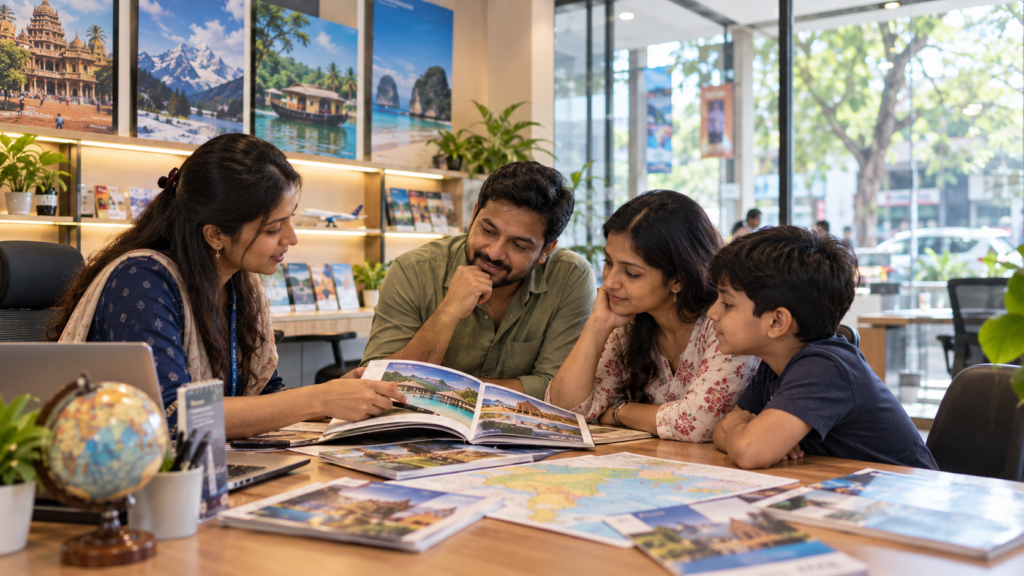
Introduction
Planning a holiday sounds simple until you start comparing flights, hotels, sightseeing, transfers, travel documents, and the overall budget. With so many options available, finding the right travel agency in Bangalore can make the planning process much easier.
The right travel partner should understand what kind of holiday you want rather than simply offering a ready-made itinerary. A family trip, honeymoon, group holiday, corporate tour, and international vacation can all require completely different planning approaches.
A good travel agency can also help bring different parts of your journey together. Step To Fly, for example, can be considered when you want support with holiday planning, tour packages, travel arrangements, and other requirements connected with your trip.
Why Choosing the Right Travel Agency Matters
A holiday is more than booking a flight and hotel. The quality of the planning can affect how smoothly the entire trip works.
A suitable agency can help you compare options, understand package inclusions, organise travel requirements, and create an itinerary around your available time.
This becomes particularly useful when:
You are travelling internationally for the first time.
Several family members are travelling together.
You have limited vacation days.
You want multiple destinations in one trip.
You need support with travel documentation.
You want a customised itinerary instead of a fixed package.
The goal is not simply to find an agency that offers the lowest price. It is to find one whose services match the way you want to travel.
What Should You Look for in a Travel Agency in Bangalore?
Before making a booking, compare agencies based on several practical factors.
1. Understand What They Specialise In
Some agencies may focus more on domestic holidays, while others handle international travel, corporate travel, group tours, or customised vacations.
Think about your specific requirement first. For example, if you are planning a family holiday to another country, look for an agency that regularly handles international itineraries rather than choosing one based only on a promotional package.
2. Check the Range of Destinations
A broader destination portfolio can make it easier to compare different travel styles and budgets.
Ask whether the agency handles:
Domestic holidays
International holidays
Family vacations
Honeymoon trips
Group tours
Corporate travel
Weekend getaways
Customised itineraries
This can also be useful when your destination changes during the planning process.
How to Compare the Best Travel Agency Bangalore Options
When comparing the best travel agency Bangalore options, do not judge them only by the package price displayed on a website.
Instead, compare what you are actually receiving for that price.
Factor | What to Check |
Package price | What is included and excluded? |
Accommodation | Hotel category, location, and room type |
Transportation | Airport transfers and local travel |
Sightseeing | Number of attractions and activities |
Flights | Airline, baggage, and travel timings |
Documentation | Visa or travel-document support |
Flexibility | Possibility of changing the itinerary |
Support | Assistance before and during the trip |
Insurance | Whether travel insurance is included |
Customisation | Ability to adjust the package |
Two packages can look similar at first but offer very different experiences once you examine the inclusions.
Why Experience Matters When Choosing Tour Operators
Experience becomes particularly important when your holiday involves multiple destinations or several travellers.
Reliable tour operators Bangalore travellers consider should be able to explain how the itinerary works rather than simply presenting a list of destinations.
Ask practical questions such as:
How much travel time is involved between destinations?
How many nights are included at each location?
Are airport transfers included?
Which sightseeing activities are part of the package?
What happens if you need to modify the itinerary?
Are meals included?
What support is available during the trip?
Clear answers can help you understand whether the itinerary is actually suitable for your holiday.
Choosing a Holiday Planner Based on Your Travel Style
A good holiday planner Bangalore travellers work with should understand that different people travel differently.
A family may prioritise comfortable hotels, convenient transportation, and child-friendly attractions. Couples may prefer privacy, scenic locations, and flexible schedules.
A group of friends might want activities and nightlife, while senior travellers may prefer fewer hotel changes and a slower pace.
Family Holidays
Families generally benefit from practical schedules rather than extremely packed itineraries.
Consider:
Hotel location
Room configuration
Travel time between attractions
Child-friendly activities
Meal preferences
Rest periods
Couple Holidays
Couples often have more flexibility in choosing accommodation and experiences.
Depending on the destination, the itinerary could combine sightseeing with restaurants, scenic locations, leisure activities, and private experiences.
Group Holidays
Group travel requires additional coordination because different people may have different preferences.
The agency should clearly explain transportation, room allocation, sightseeing schedules, and payment arrangements before the trip.
When Customized Tour Packages Make More Sense
Ready-made packages can be convenient, but they may not always match your exact requirements.
For example, you might like the destinations included in a package but want one additional day at a particular location. Or you may prefer a different hotel, fewer sightseeing activities, or more free time.
This is where customized tour packages Bangalore travellers can consider become useful.
A customised itinerary can be built around factors such as:
Your travel dates
Number of travellers
Budget
Preferred hotels
Destination interests
Sightseeing preferences
Travel pace
Special occasions
The advantage is not simply having more choices. It is being able to remove parts of an itinerary that do not suit your travel plans.
Travel Agency for International Tours: What to Check
International holidays involve additional planning compared with many domestic trips. When choosing a travel agency for international tours, ask whether they can support you with the complete planning process.
Important areas include:
Travel Documents
Check what documents are required for your destination and whether the agency provides guidance for the application process.
Flights
Compare flight timings, baggage allowances, layovers, and arrival times rather than looking only at the ticket price.
Accommodation
The hotel’s location can have a major impact on your daily travel time. A cheaper hotel located far from major attractions may not always provide better overall value.
Transfers
Airport transfers and intercity transportation should be clearly explained before booking.
Travel Insurance
International travel insurance can provide support for certain unexpected situations during a trip. Understand the coverage before purchasing a policy.
Don’t Choose a Travel Agency Only by Price
Price is important, but it should be considered alongside the overall value of the package. A very low package price may exclude several expenses that you will need to pay separately. Another package may cost more but include transfers, sightseeing, better accommodation, or other services.
Before comparing two prices, create a simple checklist:
Total package price + exclusions + additional expenses + flexibility + support
This gives you a clearer picture of what the holiday could actually cost.
Questions to Ask Before Booking
Before paying a booking amount, ask the agency to clearly explain:
What exactly is included?
What is excluded?
Are flights included?
Are airport transfers included?
Which hotels will be provided?
Is sightseeing included?
Are meals included?
What are the cancellation terms?
Can the itinerary be modified?
Who should you contact during the trip?
Getting these details in writing can prevent confusion later.
Customer Experience: A Family From Sarjapur Road
A family from Sarjapur Road was planning an international holiday during their children’s school break. They initially found several attractive packages online, but each one had a different combination of hotels, sightseeing, and transportation.
Their main concern was avoiding an itinerary that required too much travelling between locations. They also wanted enough free time for the children instead of spending every day moving from one attraction to another.
After discussing their preferred travel pace, accommodation expectations, sightseeing interests, and available budget, they narrowed down the itinerary to a more practical plan.
The family was able to focus on fewer locations while keeping enough time for sightseeing and relaxation. The experience showed why comparing an itinerary based on the entire travel plan can be more useful than choosing a package simply because it has the lowest advertised price.
Common Mistakes to Avoid When Choosing a Travel Agency
Even after finding several agencies, travellers can make mistakes during the final selection.
Avoid:
Choosing only based on the cheapest package
Not checking what the package excludes
Ignoring hotel locations
Booking without understanding cancellation terms
Assuming every sightseeing activity is included
Not asking about airport transfers
Forgetting to check baggage information
Choosing an itinerary with too many destinations
Not confirming important arrangements in writing
Taking some extra time before booking can help you understand exactly what you are paying for.
FAQs
1. How do I choose a travel agency in Bangalore?
Start by identifying your destination, budget, travel dates, and type of holiday. Then compare agencies based on their experience, package inclusions, customisation options, destination coverage, and customer support.
2. Is it better to choose a ready-made or customised tour package?
Ready-made packages can be convenient for straightforward holidays. Customised packages may be more suitable when you want specific hotels, destinations, activities, travel dates, or a different pace.
3. What should an international tour package include?
Depending on the package, it may include flights, accommodation, transfers, sightseeing, visa assistance, travel insurance, or other services. Always confirm the exact inclusions and exclusions before booking.
4. How can I compare two travel agencies?
Compare their total package cost, hotel options, transportation, sightseeing, flexibility, documentation support, cancellation terms, and assistance during the trip rather than comparing only the advertised price.
5. Do I need a travel agency for an international holiday?
Not necessarily. Simple trips can be planned independently. A travel agency can be useful when you need help coordinating flights, accommodation, transfers, sightseeing, documentation, or a multi-destination itinerary.
Choose Your Travel Partner Carefully
Finding the right travel agency in Bangalore starts with understanding your own holiday requirements. Instead of immediately choosing the cheapest package, compare the itinerary, inclusions, accommodation, transportation, flexibility, and support offered.
The right travel partner should make the planning process clearer, not more complicated. Whether you are planning a family holiday, couple’s getaway, group trip, or international vacation, taking the time to compare your options can help you create a trip that fits your expectations and budget.
When you are ready to plan your next holiday, Step To Fly can be considered as part of your search for travel planning and holiday services from Bangalore.
Best International Destinations to Visit from Bangalore in 2026
Planning an international holiday from Bangalore starts with one exciting question: where should you go? With destinations ranging from quick Asian getaways to longer European adventures, travellers have plenty of choices for different budgets, interests, and trip durations.
The best international destinations from Bangalore are not necessarily the places that are trending everywhere. The right destination depends on how many days you have, who you are travelling with, what you want to experience, and how much you are comfortable spending.
Once the destination is shortlisted, the next step is putting everything together. Flights, accommodation, sightseeing, transfers, travel documents, insurance, and daily expenses all need to work as one plan. Step To Fly can support travellers in organising these requirements around their preferred destination and travel style.
Why International Travel From Bangalore Is Different
Bangalore is a convenient starting point for exploring destinations across Asia, the Middle East, Europe, and beyond. However, choosing a destination based only on flight availability or popularity can lead to an itinerary that does not match your actual travel needs.
For a short holiday, spending too much time travelling can reduce the time available for exploring. A longer vacation, on the other hand, gives you more freedom to consider destinations that require additional travel time.
Before choosing a country, think about:
-
Number of days: Match the destination with the time you actually have.
-
Budget: Consider flights, hotels, food, transport, sightseeing, and other expenses.
-
Travel companions: Families, couples, friends, and solo travellers may need different itineraries.
-
Interests: Decide whether you prefer beaches, culture, shopping, adventure, nature, or city experiences.
-
Travel pace: Choose between a relaxed holiday and a packed sightseeing schedule.
How to Choose the Right International Destination
Start with the type of holiday you want rather than the country name.
If you have only a few days, a destination with relatively simple travel planning can make more sense. If you have a week or more, you can explore destinations with multiple cities or different regions.
Travellers comparing the best international trips from Bangalore should also consider whether they want a fixed sightseeing itinerary or more flexibility during the holiday.
A simple planning formula is:
Travel style → Budget → Available days → Destination → Itinerary
This approach prevents you from choosing a destination first and then discovering that the trip does not fit your time or budget.
Best International Destinations to Visit from Bangalore
Singapore
Singapore is a strong option for families, couples, and first-time international travellers. It combines modern attractions, shopping, food experiences, entertainment, and sightseeing in a relatively compact destination.
It can work particularly well when you want a structured holiday without spending most of your time travelling between cities.
Dubai
Dubai offers a combination of modern architecture, shopping, entertainment, desert experiences, and luxury hospitality. Families can explore attractions and entertainment, while couples can combine sightseeing with dining and leisure.
A well-planned Dubai itinerary can balance city experiences with time to relax.
Thailand
Thailand gives travellers several holiday styles to choose from. Bangkok offers shopping, food, temples, and city experiences, while destinations such as Phuket and Krabi provide beaches and island experiences.
This makes Thailand suitable for couples, families, and groups looking for a combination of relaxation and activities.
Bali
Bali is a popular choice for travellers who want beaches, nature, cultural experiences, cafés, and wellness activities in one holiday.
Rather than trying to cover the entire island, it is often more practical to select a few areas based on whether you prefer beaches, cultural attractions, nature, or a relaxed stay.
Malaysia
Malaysia combines city experiences, food, shopping, culture, and island holidays. Kuala Lumpur can provide a city-focused experience, while destinations such as Langkawi offer a slower coastal break.
It can be a practical choice for travellers who want different experiences within the same trip.
Sri Lanka
Sri Lanka offers beaches, wildlife, heritage sites, scenic landscapes, and hill-country experiences. Its variety allows travellers to create different types of itineraries depending on their interests.
Families can focus on comfort and sightseeing, while couples may prefer scenic routes and coastal stays.
Maldives
The Maldives is ideal for travellers looking for a slower island holiday. Beach stays, water activities, resort experiences, and quiet surroundings are central to the appeal.
It can be particularly suitable for couples, honeymooners, or anyone looking to spend a few days away from busy city schedules.
Vietnam
Vietnam offers a combination of food, culture, history, cities, and natural scenery. Travellers can experience a very different atmosphere by exploring destinations such as Hanoi, Ho Chi Minh City, or coastal areas.
It is worth considering when you want more than a traditional beach holiday.
Japan
Japan brings together traditional culture, modern cities, technology, food, seasonal scenery, and distinctive local experiences.
Tokyo and Kyoto, for example, provide very different experiences. Giving yourself enough time rather than rushing through several cities can make the trip more comfortable.
Switzerland
Switzerland is suited to travellers who enjoy mountains, scenic landscapes, charming towns, and European culture.
It can be planned as a dedicated holiday or combined with other European destinations when enough travel days are available.
Australia
Australia generally works better for longer holidays because of the distance and the size of the country. Sydney, Melbourne, Gold Coast, and other regions offer different experiences.
Instead of trying to see everything, selecting one or two regions can make the itinerary easier to manage.
New Zealand
New Zealand is a great choice for travellers who enjoy natural landscapes, outdoor experiences, scenic road trips, and adventure. Mountains, lakes, coastlines, and peaceful towns make it suitable for couples, families, and travellers looking for a nature-focused holiday.
With both the North and South Islands offering different experiences, a longer itinerary allows you to explore more without rushing between destinations.
USA
The USA offers a wide variety of travel experiences, from major cities and theme parks to beaches, national parks, and scenic road trips.
Travellers can choose destinations based on their interests, whether that means exploring cities such as New York, enjoying the attractions of Orlando, experiencing California, or discovering the country’s natural landscapes.
France and Italy
France and Italy are popular among travellers interested in history, architecture, food, art, fashion, and classic European experiences.
A multi-city trip can include several major attractions, but transportation and accommodation need to be planned carefully to avoid spending too much time moving from one place to another.
Countries to Visit from Bangalore: Quick Comparison
Destination |
Best For |
Suitable Trip
|
Main Experiences |
Singapore |
Families, first-time travellers |
3–5 days |
Attractions, food, shopping |
Dubai |
Families, couples |
3–6 days |
Shopping, desert, city experiences |
Thailand |
Couples, friends, families |
5–7 days |
Beaches, food, nightlife |
Bali |
Couples, families |
5–7 days |
Beaches, culture, nature |
Malaysia |
Families, couples |
4–7 days |
Cities, food, islands |
Sri Lanka |
Families, couples |
5–8 days |
Nature, culture, beaches |
Maldives |
Couples, relaxation |
3–6 days |
Beaches, resorts, water activities |
Vietnam |
Couples, groups |
6–9 days |
Food, culture, cities |
Japan |
Families, couples |
7–10 days |
Culture, food, technology |
Switzerland |
Couples, families |
7–10 days |
Mountains, scenery, cities |
Australia |
Families, long holidays |
10–14+ days |
Cities, beaches, nature |
New Zealand |
Couples, families, adventure travellers |
10–14+ days |
Mountains, lakes, road trips |
USA |
Families, couples, groups |
10–14+ days |
Cities, theme parks, beaches, national parks |
France & Italy |
Couples, families |
10–14+ days |
History, food, culture |
Affordable International Trips: What Affects the Cost?
The overall cost of an international holiday depends on much more than the flight ticket. When planning affordable international trips, consider the complete cost of the holiday before deciding whether a destination fits your budget.
The main expenses include:
-
Return airfare
-
Hotel or resort accommodation
-
Local transportation
-
Sightseeing and activities
-
Food and beverages
-
Travel insurance
-
Visa and documentation expenses
-
Shopping and personal spending
Travel dates can also affect the overall budget. Instead of choosing a destination based on the cheapest flight alone, compare the total expected spending for the entire trip.
How Many Days Do You Need?
Your available leave should influence your destination.
|
Available Time |
Destinations to Consider |
|
3–4 days |
Singapore, Dubai, Maldives |
|
5–7 days |
Thailand, Bali, Malaysia, Sri Lanka |
|
7–10 days |
Vietnam, Japan, Switzerland |
|
10–14+ days |
Australia, France & Italy, longer Europe itineraries |
These are general planning ranges rather than fixed rules. The ideal duration depends on how much sightseeing you want and whether you are visiting one destination or multiple cities.
How to Plan Your International Holiday
Before making bookings, answer these five questions:
-
Who is travelling?
-
What is the total budget?
-
How many days can you take off?
-
What experiences matter most?
-
What travel documents will you need?
Then build your itinerary around those answers.
For example, a family travelling with children may prefer fewer hotel changes and shorter travel days. A group of friends may prioritise activities, while a couple may want more relaxed mornings and scenic experiences.
When Travel Planning Support Makes Sense
Not every international holiday needs extensive planning support. A simple trip with one destination and straightforward bookings can be managed independently.
However, planning becomes more involved when you have multiple cities, family members with different needs, several activities, transfers, or documentation requirements.
A travel agency can help coordinate different parts of the trip so that flights, accommodation, sightseeing, transfers, and other requirements fit into one practical itinerary.
How to Build a Better Itinerary
A good international itinerary should not feel like a timetable that has to be followed every minute.
Try to keep major sightseeing activities manageable and leave enough time for meals, rest, transportation, and unexpected changes.
A practical itinerary can include:
-
One or two major attractions each day
-
Free time between activities
-
Buffer time for transportation
-
Flexible evenings
-
Fewer hotel changes
-
A slower day during longer holidays
The objective is not to count how many attractions you visited. It is to make sure you actually enjoy the destination.
Customer Experience: A Couple From Indiranagar
A couple from Indiranagar was planning their first international holiday together. They initially had several destinations on their list, but each option offered a different experience and required a different budget.
Their main concern was creating a holiday that combined sightseeing and relaxation without moving between locations every day. After comparing their available days, preferred experiences, accommodation expectations, and overall budget, they narrowed the plan to a destination that offered a better balance.
Instead of filling every day with activities, they kept a few open periods for exploring local cafés, shopping, and simply enjoying the destination. The final itinerary felt less rushed and gave them enough flexibility throughout the trip.
Common International Travel Mistakes to Avoid
Even an exciting destination can become stressful when the planning is rushed. Watch out for these common mistakes:
-
Choosing a destination without considering travel time
-
Trying to cover too many cities
-
Booking hotels without checking their location
-
Ignoring transportation between attractions
-
Underestimating daily expenses
-
Forgetting travel insurance
-
Not keeping copies of important documents
-
Leaving no emergency budget
-
Planning every hour of the holiday
-
Choosing a destination only because it is trending
A little preparation before departure can make a significant difference once you reach your destination.
Make Your International Holiday Count
Choosing between different international holiday destinations becomes easier when you begin with your own travel priorities. Consider your budget, available leave, preferred experiences, and the people travelling with you before finalising the destination.
For travellers planning overseas holidays from Bangalore, the most memorable holiday does not have to include the maximum number of attractions or cities. A well-balanced itinerary, realistic budget, comfortable pace, and destination that suits your interests can make the entire experience more enjoyable.
FAQs
1. What are some of the best international destinations from Bangalore?
Singapore, Dubai, Thailand, Bali, Malaysia, Sri Lanka, Maldives, Vietnam, Japan, Switzerland, Australia, France, and Italy can all be considered depending on your budget, available days, and travel preferences.
2. Which countries are suitable for a short international holiday?
Singapore, Dubai, Maldives, Thailand, and Malaysia can work for shorter holidays. The right choice depends on your available days, itinerary, and preferred travel experience.
3. How can I plan an affordable international trip?
Start by calculating the complete trip cost, including flights, accommodation, food, transportation, sightseeing, documentation, insurance, and personal expenses. Comparing the total cost is more useful than looking at airfare alone.
4. How many days are enough for an international trip from Bangalore?
It depends on the destination. Shorter trips can work for destinations closer to Bangalore, while Japan, Switzerland, Australia, and multi-country European holidays generally require more time.
5. Is it better to plan an international holiday myself or use a travel agency?
Simple single-destination trips can be planned independently. Travel planning support can be useful for families, groups, multi-city itineraries, documentation, transfers, and holidays involving several bookings..