

MICE Travel Agency in Bangalore: Planning Conferences, Meetings and Incentive Trips
Introduction
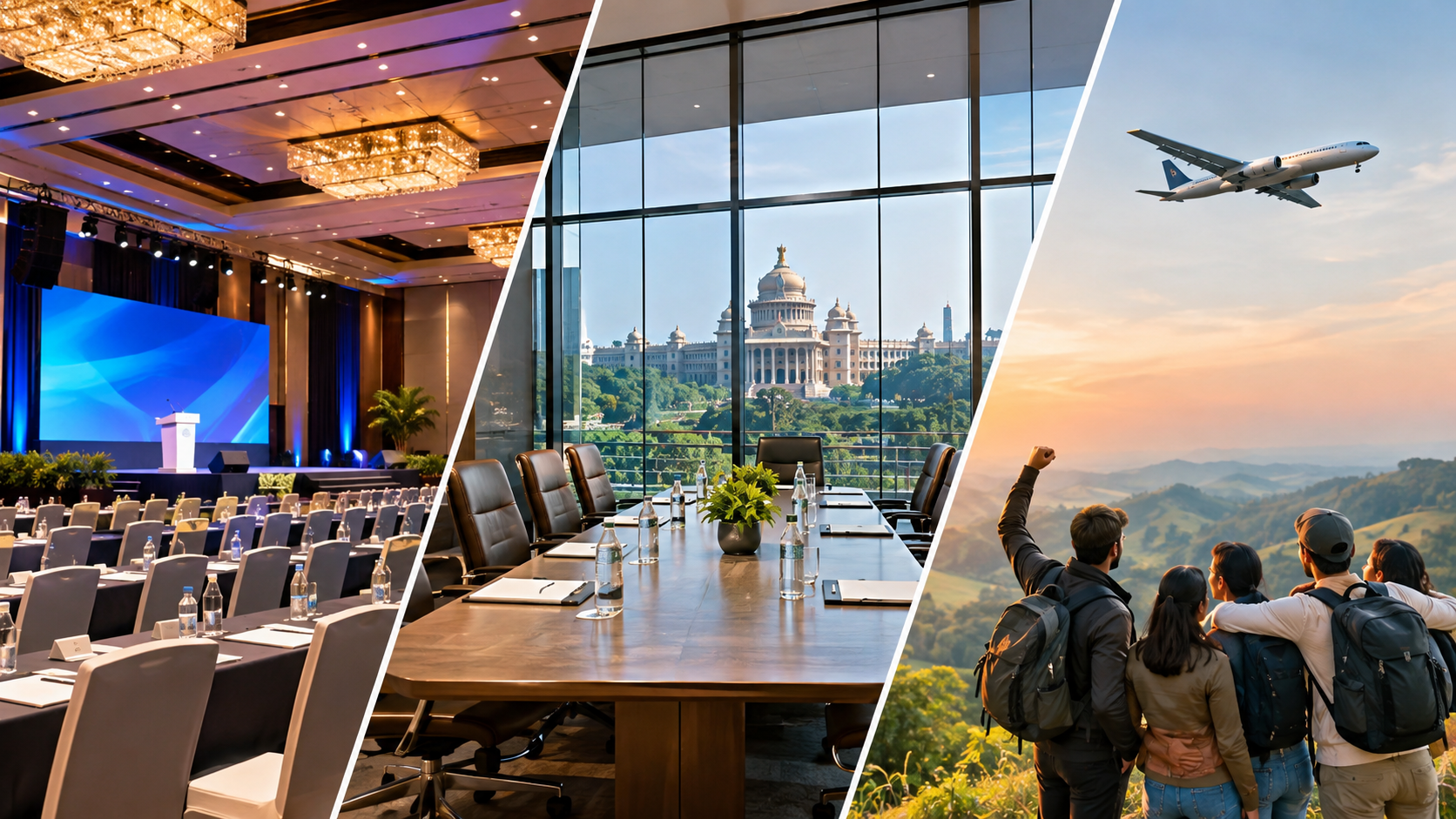
Bangalore is home to technology companies, global capability centres (GCCs), startups, manufacturing firms and professional service organisations. These businesses regularly organise leadership meetings, industry conferences, exhibitions and employee reward trips. Choosing the right MICE travel agency in Bangalore can help companies coordinate these events while keeping travel arrangements, budgets and participant requirements organised.
Planning corporate events in Bangalore requires an understanding of both business needs and local logistics. Participants may arrive from different cities, venues may be spread across business districts, and traffic can affect event schedules. A structured approach makes it easier to manage these details. Step To Fly can be approached for corporate group travel requirements, including meetings, conferences and incentive trips.
What Is MICE Travel?
MICE stands for Meetings, Incentives, Conferences and Exhibitions. It refers to travel organised around professional events and corporate activities. Unlike individual business trips, MICE programmes often involve groups of participants, planned schedules and multiple event-related arrangements.
Category | Purpose | Common examples |
Meetings | Bring people together for business discussions | Leadership reviews, client meetings and team gatherings |
Incentives | Recognise performance and reward employees | Sales achievement trips and employee reward holidays |
Conferences | Share knowledge and discuss industry developments | Seminars, annual conferences and training events |
Exhibitions | Showcase products, services and business capabilities | Trade shows, product launches and industry expos |
A Bangalore-based company might host a technology conference for international delegates, arrange a dealer meet for business partners or organise an incentive holiday for its sales team. Each event has different requirements, which is why planning should begin with a clear understanding of its purpose.
Why Bangalore Businesses Need Professional MICE Planning
Bangalore’s business landscape creates varied corporate event requirements. Technology companies and GCCs may organise regional conferences and leadership meetings. Startups may bring investors, clients and distributed teams together. Manufacturing and engineering businesses may conduct dealer meets, product demonstrations and industry exhibitions.
These events can involve employees and guests travelling from several locations. When bookings, schedules and event arrangements are handled independently, internal HR and administration teams may spend considerable time coordinating details.
Professional MICE planning helps businesses manage the event as one organised project. It can provide better visibility into costs, reduce administrative follow-ups and create a more convenient experience for participants.
The local business location also matters. For example:
Bangalore business area | Planning consideration |
Whitefield | Consider venue and accommodation options near technology parks and corporate offices. |
Outer Ring Road | Account for traffic and transfer times around major IT corridors. |
Electronic City | Consider accessibility for technology, engineering and manufacturing teams. |
Manyata Tech Park and North Bangalore | Evaluate accommodation and transport for companies operating in northern business districts. |
Central Business District | Consider access to business hotels, meeting venues and client locations. |
Peenya Industrial Area | Relevant for industrial meetings, supplier events and manufacturing-related gatherings. |
These areas have different travel requirements. A venue that is convenient for one group may be difficult for participants staying elsewhere. Businesses should consider the event location and attendee movement before confirming arrangements.
Planning a Corporate Conference in Bangalore
A successful conference needs a practical plan that connects the event’s objectives with the experience of its attendees. The following steps help organisers build that plan.
1. Establish the Event Brief
Begin with the purpose, dates, duration and expected number of participants. Identify whether the event is an internal meeting, customer conference, training programme or industry gathering.
Also prepare a participant list with details such as departure city, arrival preferences, accommodation needs and any special requirements. This information helps estimate the overall scope and budget.
2. Choose the Right Venue
The venue should match the event’s size and format. Consider seating capacity, presentation equipment, meeting rooms, dining facilities and accessibility.
For Bangalore events, evaluate the venue in relation to the participants’ hotels and likely travel routes. Allow realistic time for transfers, especially when attendees need to arrive before a scheduled session.
3. Coordinate the Event Schedule
Prepare a schedule that considers participant arrival times, registration, conference sessions, meals and departures. Avoid placing important sessions too close to expected arrival times, particularly when attendees are travelling from outside Bangalore.
A clear schedule also helps the organisers identify where additional arrangements, such as early check-ins or pre-event meetings, may be required.
4. Prepare Participant Communication
Share essential information before the event. This may include the venue address, agenda, travel details, accommodation information, dress requirements and contact details for assistance.
A single, updated itinerary is easier for participants to follow than multiple messages containing different versions of the schedule.
What Does MICE Travel Management Include?
MICE travel management brings the travel-related parts of a corporate event under a coordinated plan. The services required depend on the group size, destination and event format.
Group Flights and Travel Coordination
Companies hosting national or international events may need to arrange travel for participants from several cities. Booking requirements can differ according to arrival dates, preferred flight times, baggage needs and individual schedules.
Organisers should confirm passenger details early and establish a process for handling changes. This is particularly important when speakers, senior executives or international guests have fixed schedules.
Accommodation and Hotel Selection
Hotel selection should consider more than room rates. Distance from the venue, room availability, meeting facilities, dining options and cancellation conditions can all influence the decision.
For group stays, advance corporate hotel booking can help businesses review suitable options and confirm room requirements before availability becomes limited.
Ground Transportation
The transport plan should reflect the number of attendees and the event schedule. Depending on the group, this may involve airport pickups, shared vehicles or dedicated transport for speakers and senior guests.
In Bangalore, organisers should consider the time of day and distance between the airport, hotels and venue. Building reasonable travel buffers into the schedule can help avoid unnecessary pressure on participants.
On-Trip Coordination
Even carefully prepared plans may need adjustments. Flight changes, delayed arrivals or updates to the event agenda can affect existing arrangements.
Before choosing a travel partner, businesses should understand how booking updates, urgent requests and participant communication will be managed. Clear responsibilities help prevent confusion when plans change.
Incentive Travel Packages Bangalore: Rewarding Employees Through Experiences
Incentive travel gives companies a way to recognise performance and build stronger relationships within their teams. It can be used for sales achievement programmes, employee recognition, channel partner rewards and annual performance celebrations.
The destination should reflect the company’s objective, group size, available time and budget. A short domestic holiday may work well for a team with limited leave, while an international trip may suit a larger reward programme planned well in advance.
Incentive travel packages in Bangalore can be considered around different group interests and travel styles, such as:
Short domestic escapes: Suitable for teams looking for a brief break without extensive travel.
Beach holidays: Combine relaxation with informal group activities.
Adventure experiences: Offer opportunities for trekking, outdoor activities and shared challenges.
International group trips: Provide a larger travel experience when the budget and preparation time allow.
Wellness retreats: Give employees an opportunity to unwind through nature and wellness-focused activities.
The programme should feel like a genuine reward rather than another compulsory work event. Gathering employee preferences and considering accessibility, travel duration and activity levels can make the experience more meaningful.
Common MICE Planning Challenges and How to Avoid Them
Corporate events can become difficult to manage when decisions are delayed or responsibilities are unclear. Some common challenges can be addressed during the planning stage.
Challenge | Practical solution |
Budget increases | Set a realistic budget and review inclusions, taxes and cancellation conditions before confirming suppliers. |
Venue and hotel locations are inconvenient | Evaluate travel time between accommodation and the event venue. |
Participant numbers change | Keep attendee information updated and confirm deadlines for booking modifications. |
Conflicting schedules | Coordinate the event agenda with arrival and departure plans. |
Last-minute communication gaps | Assign a point of contact and share one updated itinerary. |
Unclear supplier responsibilities | Confirm who handles each booking, payment and change request. |
One common mistake is treating travel arrangements as a separate task after the venue and agenda have been finalised. Travel considerations should be included from the beginning because they can influence venue selection, event timings and the overall budget.
How to Choose the Right MICE Travel Agency in Bangalore
Not every travel agency offers the same level of corporate planning support. Businesses should evaluate potential partners based on their requirements rather than choosing only by price.
Corporate group experience: Ask whether the agency has handled conferences, meetings, exhibitions or incentive trips involving a similar number of participants.
Service coverage: Check which arrangements it can assist with, including group bookings, accommodation, transportation and itinerary coordination.
Budget transparency: Request a clear cost breakdown and understand what is included, what may cost extra and which cancellation conditions apply.
Communication and support: Find out how booking updates, urgent requests and schedule changes are handled.
Flexibility: Corporate events can change as attendee numbers and requirements become clearer. Understand the process for modifying existing arrangements.
Destination knowledge: For events outside Bangalore, local knowledge can help with accommodation choices, transportation and destination planning.
Before requesting a proposal, prepare an event brief with the dates, location, group size, departure cities, accommodation requirements and estimated budget. This gives the agency enough information to suggest arrangements that match the actual event.
Example: Planning a Conference for a Bangalore Technology Company
Consider a technology company organising a two-day conference near its Whitefield office for 80 employees and business partners. Participants are travelling from Mumbai, Hyderabad and Chennai, while local employees will attend from different parts of Bangalore.
The company needs to coordinate outstation travel, nearby accommodation, airport transfers and the conference schedule. It also needs to account for registration timings, speaker arrivals and daily movement between the hotel and venue.
A coordinated plan allows the administration team to maintain participant information, monitor important booking details and share one itinerary. Instead of following up separately on every arrangement, the team can work from a common schedule and respond more efficiently when details change.
This illustrative scenario shows why MICE planning is valuable for Bangalore businesses. The objective is not simply to arrange travel, but to make sure the event’s logistics support its business purpose.
When Should Businesses Start Planning MICE Travel?
The preparation time depends on the event size, destination, season and number of participants. The following timeline can serve as a starting point for larger corporate events.
Planning stage | Suggested timeline |
Define objectives, group size and budget | 3–6 months before |
Shortlist venues and destinations | 3–5 months before |
Review travel and accommodation options | 2–4 months before |
Confirm participant details | 1–3 months before |
Finalise schedules and local arrangements | 2–4 weeks before |
Share final event information | Before departure |
International conferences and incentive trips may require additional preparation for passports, visas and other documentation. Businesses should also allow time for participant changes and supplier confirmation.
Frequently Asked Questions
1. What does a MICE travel agency do?
A MICE travel agency helps businesses organise travel requirements for meetings, incentive trips, conferences and exhibitions. Services may include group bookings, accommodation, transportation and itinerary coordination.
2. Why do Bangalore companies need MICE travel services?
Bangalore companies often organise conferences, client meetings, training programmes and incentive trips involving participants from different cities. Professional planning can help coordinate these arrangements around the event schedule.
3. Can small businesses use MICE travel services?
Yes. MICE services are not limited to large companies. Small and medium-sized businesses can use planning support for team meetings, client events, training programmes and employee reward trips.
4. What should companies consider when planning incentive travel?
Companies should consider the purpose of the reward, employee preferences, group size, destination, travel duration and budget. The programme should be practical and enjoyable for participants.
5. How early should a company book conference travel?
For larger events, beginning three to six months in advance is a useful approach. The exact timeline depends on the destination, group size, hotel availability and travel season.
Conclusion
For Bangalore businesses, MICE planning is an important part of organising successful corporate events. Whether a company is hosting a leadership meeting in Whitefield, an industry conference near the Outer Ring Road or an employee reward trip, the event needs a clear plan for participants, schedules and budgets.
A well-coordinated corporate event travel plan can reduce administrative pressure and help companies focus on their business objectives. Starting early also gives organisers more time to evaluate venues, suppliers and participant requirements.
Businesses looking for a MICE travel agency in Bangalore can approach Step To Fly to discuss their corporate group travel needs. Sharing the event location, dates, participant numbers and budget is a practical first step towards planning a well-organised corporate experience.